Bottom Shelf Literacy: The Immigrant Scholar Who Learned English From Grocery Aisles and Changed What American Kids Read
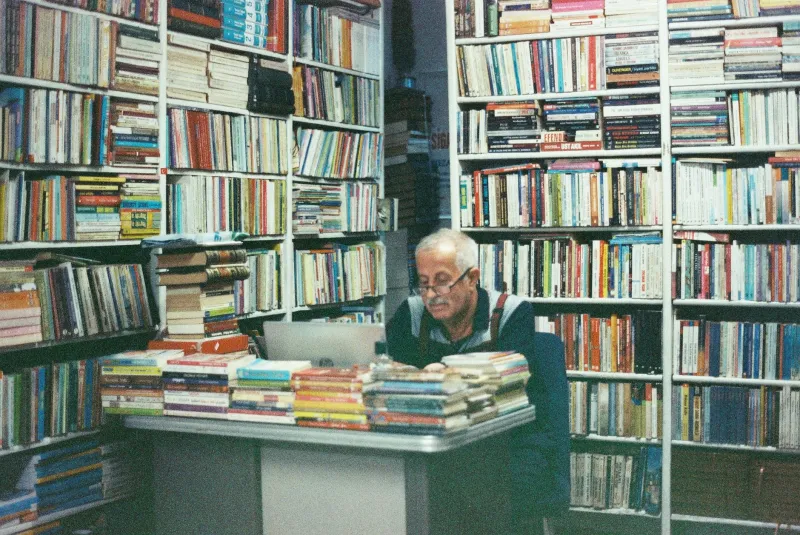
Most people learn a second language from a teacher, a textbook, or an app that congratulates them in a cheerful font when they get something right. Alma Flor Ada learned English from the cereal aisle.
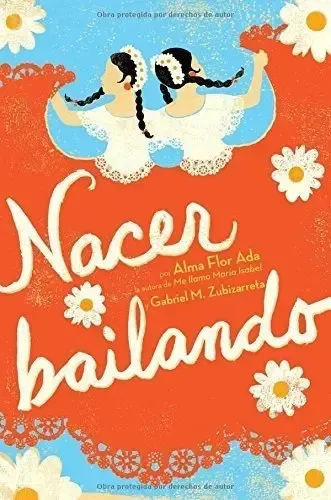 Photo: Alma Flor Ada, via http2.mlstatic.com
This is not a metaphor. When she arrived in the United States — a Cuban-born scholar with a rich literary education in Spanish and an almost nonexistent grasp of English — she did what people in her situation have always done: she used what was around her. Packaging. Bus route signs. Handwritten store placards. The battered paperbacks in the discount bin at the drugstore that nobody else wanted. She read everything she could find, at whatever level she could manage, and she paid attention not just to what the words meant but to how they moved — how they sat next to each other, what rhythm they created, what they were trying to do.
It was, by any conventional measure, a strange way to acquire a language. It turned out to be an extraordinary way to understand one.
The Education That Preceded the Education
Before the cereal boxes, there was Cuba. Ada grew up in a family that took language and literature seriously in the way that certain families do — not as academic subjects but as living things, as tools for understanding what it meant to be human. She read widely and deeply in Spanish from childhood, absorbed oral storytelling traditions, and developed an early sensitivity to the relationship between language and identity that would later become the philosophical core of her work.
She eventually earned a doctorate in Spanish literature from the Pontificia Universidad Católica del Perú, and her academic credentials were substantial. But credentials in one language don't automatically transfer to another. When she arrived in the United States and began building a life and a career in English, she was, in the ways that mattered practically, starting over.
 Photo: Pontificia Universidad Católica del Perú, via studyatuniversity.com
That experience of starting over — of being an educated, sophisticated person who nonetheless had to sound out words on a soup can — gave her something that no amount of formal English instruction could have provided: she knew exactly what it felt like to be on the outside of a language, pressing her nose against the glass, working out the rules from the evidence available.
What the Grocery Store Actually Teaches
There's a reason children's literature is hard to write well. The best of it operates in a very narrow band — it has to be simple enough for a developing reader to access, but it cannot be condescending, because children are extraordinarily sensitive to being talked down to. It has to feel true, even when it's fantastical. It has to honor the emotional reality of its audience without softening that reality into something unrecognizable.
Alma Flor Ada's unconventional path to English fluency gave her an instinct for exactly this. When you learn a language from its most functional, everyday forms — the text on a box of cornflakes, the instructions on a bus transfer — you develop a feel for the words that actually carry weight versus the words that are decorative. You learn, by necessity, to identify what is essential.
You also learn what it feels like to encounter language as a stranger. And that experience — of being outside the linguistic community, of working to belong to it — is the experience of a very large number of American children. Children who speak one language at home and another at school. Children who are code-switching before they have a word for what they're doing. Children who open a book and find that nobody in it lives a life that looks anything like theirs.
Ada knew that feeling from the inside. She wrote toward it.
Building a Shelf That Didn't Exist
When Ada began writing and publishing children's books in the 1970s and 1980s, the American children's publishing industry had a particular idea of whose childhood was worth depicting. That idea was narrow. Overwhelmingly white, overwhelmingly middle-class, overwhelmingly rooted in a cultural experience that was specific to one segment of the American population while being presented as universal.
Latino children, in particular, were largely invisible in the picture book section of the average American library. Their languages, their family structures, their particular relationship to two cultures at once — these were not considered commercially viable subjects. Publishers worried about market size. Editors worried about relatability. The result was a self-fulfilling absence: because the books didn't exist, the audience for them wasn't being counted, and because the audience wasn't being counted, the books didn't get made.
Ada's work challenged this logic at its root. Her books — which include My Name Is María Isabel, Gathering the Sun, The Gold Coin, and dozens of others — were not written as niche products for a niche audience. They were written as stories about universal human experiences: belonging, family, the negotiation between different parts of one's identity, the search for a name for what you feel. They happened to center characters and communities that mainstream publishing had been ignoring.
The books found their audience with a speed that should have embarrassed the industry's prior assumptions. They ended up in classrooms across the country, not just in schools with large Latino student populations, but broadly — because the themes Ada was writing about were not actually niche at all. They were human.
The Scholarship Behind the Stories
What distinguishes Ada's contribution from simple representation is that it was grounded in serious intellectual work. She became a professor at the University of San Francisco, where she developed and taught in the field of multicultural education. She wrote extensively about the relationship between language, identity, and literacy — about what it means to learn to read in a language that is not the language of your home, and what is lost and gained in that process.
 Photo: University of San Francisco, via i.ytimg.com
Her academic framework, influenced by the educational philosophy of Paulo Freire, held that literacy is not a neutral skill. It is always embedded in a cultural context, and the stories children encounter when they are learning to read shape their understanding of whose experiences count as real, whose lives are considered worth narrating. A child who never sees themselves in a book is receiving a message, even if no one intended to send it.
Ada intended to send a different message. And she had the scholarly rigor to articulate why it mattered.
The Unexpected Advantage of the Hard Way
There's a pattern that runs through the lives of people who change their fields from the outside: they often bring something that insiders, by virtue of their training, have been taught not to notice. Alma Flor Ada's outsider approach to English — provisional, resourceful, attentive to the grain of everyday language — gave her a writer's ear that was tuned to a different frequency than the one most children's authors were broadcasting on.
She heard the way a child actually reaches for a word. She knew what it felt like to want to understand something and not quite have the tools yet. She wrote from that place, and millions of children recognized it immediately.
The cereal boxes, it turns out, were a pretty good place to start.