The Silence That Became an Advantage: How One Deaf Inventor Rewired a City the Credentialed Engineers Missed
The Doors That Stayed Closed
In 1908, when he was fourteen years old, Thomas arrived at the technical school in his Midwest city with a letter of acceptance and a translator. He made it through the front door. He didn't make it past the second week. The school's director called his parents in for a meeting—polite, professional, final. The problem wasn't his intelligence. The problem was his ears. How could he learn engineering if he couldn't hear the lectures? How could he work in a factory if he couldn't hear the warnings? The institution had rules. Rules existed for reasons. The door closed.
What happened next wasn't rebellion. It was pragmatism. If the schools wouldn't teach him, he would teach himself. If the institutions had decided he didn't belong, he would find another path. He was sixteen years old, and he had already learned the most important lesson of his life: sometimes the people who say no are just admitting they don't know how to say yes.
He walked to the public library on a Tuesday afternoon and checked out a book on electrical theory. Then another. Then another. For three years, he read everything the library had on electricity, circuitry, wiring, generators, and power distribution. He read in silence—which, as it turned out, was exactly the right way to read about electricity.
What Silence Teaches You
There's a particular kind of attention that develops when you can't rely on sound. You learn to watch more carefully. You learn to read the physical world in ways that people who listen to it often miss. A machine doesn't just make noise when something is wrong; it moves differently. A circuit doesn't just hum; it behaves differently. A system under stress doesn't just sound strained; it shows strain in ways you can see if you're looking closely enough.
Thomas began doing informal apprenticeships—unpaid work in small electrical shops, fixing equipment, winding coils, testing circuits. He was useful because he was careful. He was careful because he had to be. He couldn't ask "what does that sound mean?" so he learned to ask "what does that look like?" and "what does that feel like?" and "what does the pattern tell me?" These weren't lesser questions. They were often better questions.
By his early twenties, he was working for a small electrical contractor, doing installations and maintenance on the city's emerging power grid. He wasn't an engineer—he didn't have the credentials for that, would never have the credentials for that. But he understood electricity in a way that went deeper than formulas. He understood it the way a deaf person understands conversation: not by listening to the words, but by paying attention to everything else.
The Problem Nobody Else Could See
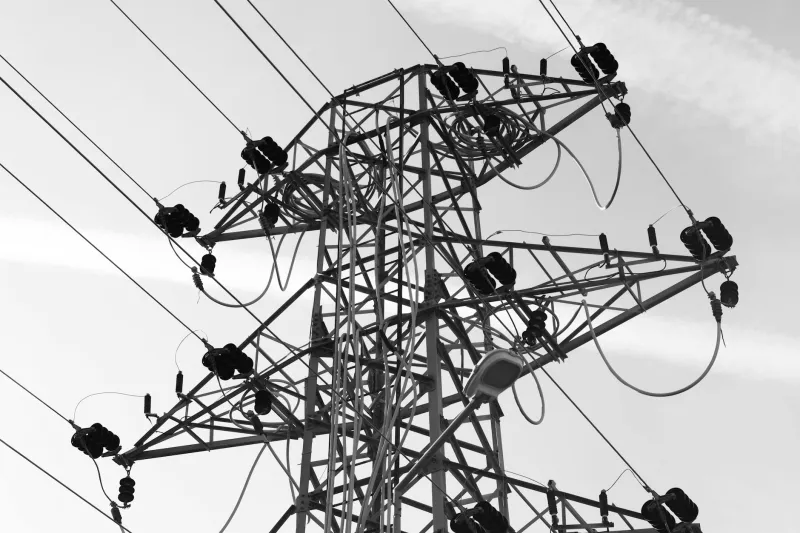
In 1920, the city's power grid was failing. Not completely—the lights still came on. But there were frequent brownouts, occasional blackouts, and a growing sense among the electrical engineers that something fundamental was wrong with the system's design. They'd spent months analyzing the math, running calculations, examining blueprints. They'd brought in consultants from back East. Nobody could figure it out.
Thomas was doing routine maintenance on a substation when he noticed something. The equipment was installed correctly. The wiring was sound. The math checked out. But the physical layout of the system—the actual spatial arrangement of the components—created dead zones. Places where current moved inefficiently. Places where the system had to work harder than it should.
He couldn't explain it in the language of electrical engineering because he'd never formally studied electrical engineering. But he could draw it. He could show them. He created detailed diagrams of how the current actually moved through the physical space, where it got stuck, where it pooled, where it had to backtrack. He showed them that the problem wasn't theoretical. It was spatial. It was architectural.
The city's chief engineer looked at the diagrams for a long time. Then he looked at Thomas. Then he looked back at the diagrams. "How did you see this?" he asked. Thomas didn't have a good answer. He'd just... seen it. Watched it. Paid attention to how the physical world actually worked, separate from how the equations said it should work.
The Rewiring
The retrofit took six months. They physically relocated components, reconfigured the grid's architecture, created new pathways for current distribution. When they switched it on, the brownouts stopped. The system ran cleaner, more efficiently, with less waste. It was like watching a person finally take a deep breath after holding it underwater.
Thomas was offered a position as an electrical consultant—not an engineer, because he still didn't have the degree, but close enough to matter. He spent the next thirty years helping cities across the region redesign their power infrastructure. He never did get a formal degree. He never needed one. The credentials that had been denied to him at fourteen had become irrelevant by the time he was forty.
What became relevant instead was his ability to see problems that credentialed people missed. He looked at systems the way he'd learned to look at everything: not by listening to what they were supposed to do, but by watching what they actually did. Not by trusting the theory, but by trusting his eyes.
The Blind Spot of Credentials
There's an irony buried in this story that Thomas himself probably never articulated. The institution that rejected him did so because it couldn't imagine how to accommodate his disability. It was a failure of imagination, dressed up as institutional necessity. But that same failure forced him to develop a form of problem-solving that the institution's own graduates couldn't match.
He became, in effect, a specialist in seeing what other people's educations had trained them not to notice. The formal study of electrical engineering taught you the theory first, then the practice. It taught you to trust the math, to trust the models, to trust the frameworks that had been built by people smarter than you. Thomas had learned backwards. He'd started with the physical reality, then worked toward the theory. He'd learned to trust his observations before he'd learned to trust anyone's equations.
By the time electrical engineering became a formal discipline that required credentials, Thomas had already spent twenty years proving that credentials weren't the only way to become an expert. He'd learned from books that anyone could check out. He'd learned from watching. He'd learned from trying. He'd learned the way humans learned before institutions decided to standardize learning.
The Lesson That Stayed Quiet
Thomas never became famous. He wasn't written up in the major engineering journals of his era—he didn't have the credentials to be taken seriously by those institutions. But every city he worked for knew his name. Every power grid he touched ran more efficiently. Every electrician who worked under him learned to look more carefully at how systems actually moved, separate from how systems were supposed to move.
He died in 1962, at seventy-eight years old. His obituary in the local paper was respectful but brief. It mentioned his contributions to the city's electrical infrastructure. It didn't mention the school that turned him away. It didn't mention the library books. It didn't mention the particular kind of attention that only develops when you learn to see the world without hearing it.
But somewhere in every city grid that he touched, his influence is still running. Every efficient system, every redesigned infrastructure, every problem solved by looking more carefully at the physical reality instead of trusting the theory—that's his legacy. Not because he was credentialed. But because he wasn't.