The Radio That Taught America
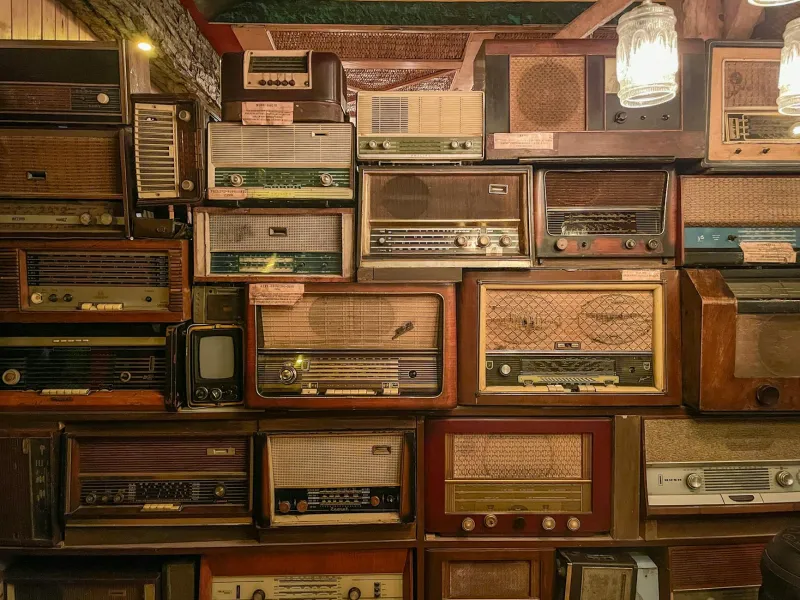
The radio was barely functional when Ahmed Hassan found it in the refugee camp's donation pile. Static overwhelmed most frequencies, and the antenna had been repaired with wire and hope. But for a sixteen-year-old who spoke no English, that broken radio became his first teacher, his cultural translator, and eventually, his pathway to creating one of America's most beloved fight songs.
Hassan had fled Lebanon with his family in 1967, carrying nothing but the clothes on their backs and stories of a home they might never see again. The refugee camp outside Detroit was supposed to be temporary – a stopping point before they figured out what came next. For Hassan, it became a three-year university in American sound.
Learning Language Through Melody
While other refugees attended formal English classes, Hassan spent his evenings hunched over that temperamental radio, slowly turning the dial to catch fragments of broadcasts. Sports announcers became his grammar teachers. Radio DJs taught him slang. Commercial jingles showed him how Americans made words stick in your head.
He filled notebook after notebook with phrases he didn't understand, phonetically spelling out everything from weather reports to Top 40 hits. His family worried he was wasting time, but Hassan was conducting an experiment in cultural absorption that would later prove invaluable.
The breakthrough came during a Detroit Tigers game in 1969. Hassan had been following the team's season through radio broadcasts, picking up baseball terminology and crowd energy along with English vocabulary. As the Tigers rallied in the bottom of the ninth, he found himself humming along with the crowd noise, creating melodies that matched the rhythm of the announcer's rising excitement.
The Sound of Belonging
When Hassan's family finally moved to Detroit proper in 1970, he carried three years of absorbed American culture in his head. But he also brought something else: an outsider's ear for what made Detroit sound like Detroit. He heard things that natives took for granted – the industrial percussion of the auto plants, the specific cadence of Midwest speech, the way hope and defiance mixed in the voices of sports fans who'd been disappointed too many times to quit believing.
Hassan started writing songs almost immediately. His English was still imperfect, but his understanding of American musical DNA was sophisticated in ways that surprised everyone who heard his work. He could capture the essence of American optimism while acknowledging the struggle underneath it.
Local musicians started asking him to write for them. Hassan's songs had a quality that was hard to define but impossible to ignore – they sounded authentically American while bringing fresh perspectives that born-and-raised Americans couldn't quite access.
The Fight Song That Stuck
In 1975, the Detroit Lions were looking for a new fight song. The team had been using a generic march that could have belonged to any franchise in any city. They wanted something that sounded specifically like Detroit, something that would get the crowd at the old Pontiac Silverdome on its feet.
Hassan submitted a demo that combined traditional fight song structure with the rhythmic patterns he'd absorbed from years of listening to Detroit radio. The melody was simple enough for 80,000 people to sing, but the arrangement included subtle nods to Middle Eastern musical traditions and the industrial sounds of the Motor City.
The Lions loved it. More importantly, so did the fans.
When Outsiders Hear More Clearly
"Roar of the Motor City" became an instant classic. Within a year, other Detroit sports teams were asking Hassan to adapt it for their use. The song captured something about Detroit's identity that locals had felt but never quite heard articulated in music.
Hassan's secret was his refugee perspective. He'd arrived in America with no preconceptions about what Detroit was supposed to sound like. Instead, he listened carefully to what it actually did sound like – the mix of hope and grit, the industrial pride, the way people in this city talked about their teams like family members who might break your heart but would always be yours.
Critics noted that Hassan's fight songs had an unusual emotional depth for the genre. Where most team anthems were purely celebratory, Hassan's work acknowledged struggle while insisting on triumph. It was the perspective of someone who understood what it meant to lose everything and still believe in the possibility of winning.
The Anthem That Outlasted Everything
Nearly fifty years later, variations of Hassan's fight song still echo through Detroit's stadiums. The Lions eventually moved back to downtown Detroit. The city went through bankruptcy and renewal. Players came and went, seasons ended in disappointment or unexpected glory, but Hassan's music remained.
The song became bigger than sports. Local high schools adopted versions for their marching bands. Wedding DJs played it at receptions throughout the metro area. It became the sound people heard in their heads when they thought about home.
Hassan never expected his broken-radio education to lead to this kind of lasting impact. He was just a refugee kid trying to understand his new country through whatever tools he could find. But his outsider's ear, trained on crackling frequencies and foreign rhythms, heard something about America that America needed to hear about itself.
In a city built by immigrants and shaped by industry, Hassan's story feels perfectly Detroit: someone who arrived with nothing, paid attention to everything, and created something that became essential to the place that gave him a chance to belong.