He Pumped Gas for a Decade. Then He Figured Out Why America's Roads Keep Falling Apart.
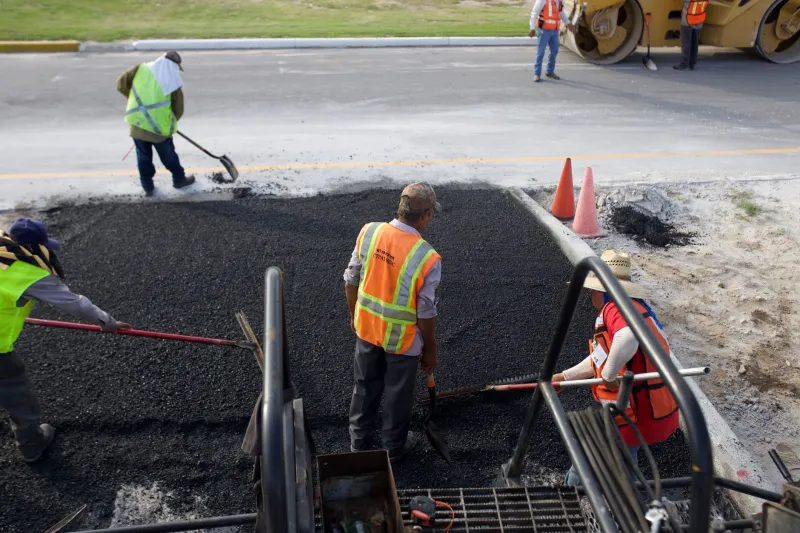
The gas station sat on the corner of a state route in central Ohio, and for most of the 1990s, Clifton Reaves knew every crack in the asphalt around it by name.
Not literally, of course. But when you spend a decade on your feet, watching thousands of cars roll over the same quarter-mile of road every single day, you start to notice things. The way a certain patch near the drainage grate would heave every February. The way the repaved section near the old stoplight always started peeling at the edges within eighteen months, no matter how many times the county crews came through. The way water didn't run off the road the way it was supposed to — it pooled, crept, and vanished into places it had no business going.
Clifton wasn't an engineer. He had a GED he'd earned at twenty-two, a good memory, and a lot of time to think between fill-ups.
What he eventually built from those observations became something that major infrastructure firms are still using today.
The Education Nobody Planned For
Clifton grew up in Mansfield, Ohio, the second of four kids in a household where money was always the topic nobody wanted to discuss. He dropped out of high school at sixteen, not because he lacked the ability, but because his family needed income faster than a diploma could provide it. He cycled through a few jobs before landing at the gas station, where the owner liked his work ethic and the hours were predictable.
For the first few years, the road was just the road. But somewhere around his fifth year on the job, Clifton started keeping a notebook. Nothing formal — just observations. Dates when he noticed new cracks. Sketches of drainage patterns after heavy rain. Notes about which sections of pavement seemed to deteriorate faster after the county applied certain types of patching compound.
"I wasn't trying to be an engineer," he later said in an interview with a regional civil engineering journal. "I was just bored, and it bothered me that they kept fixing the same spots over and over and it never stuck."
The notebook grew. Then he started a second one.
What the Credentials Missed
Here's the thing about infrastructure maintenance in the United States: it's an industry built almost entirely on reactive logic. Something breaks, someone fixes it. The budgeting cycles, the inspection protocols, the contracting systems — nearly all of it is designed to respond to failure rather than anticipate it.
Clifton didn't know that when he started paying attention. Which, it turns out, was exactly the point.
Without any training in how roads were supposed to be assessed, he had no reason to look at them the way professionals did. He looked at them the way a person who stood next to them every day would look at them. He noticed correlations that didn't appear in standard inspection reports because inspectors weren't there often enough to see them. He noticed that certain types of surface cracking showed up in predictable sequences — small surface spiderweb fractures, then edge deterioration, then subsurface failure — and that if you caught the pattern early, the repair cost a fraction of what it cost after the subsurface gave out.
He also noticed that drainage was almost always the real problem. Not the pavement itself, not the materials, not even the traffic load. Water getting into places it shouldn't, freezing, expanding, and destroying the road from underneath — that was the story playing out in front of him, over and over, in a dozen variations.
In 2001, after a particularly brutal Ohio winter collapsed a section of road he had been documenting for three years, Clifton wrote a letter to the county engineer's office. He included eight pages of notes, hand-drawn diagrams, and a timeline showing the progression of the damage.
The county engineer, to his credit, wrote back.
The Unlikely Partnership
What followed wasn't a Hollywood moment. Nobody handed Clifton a hard hat and put him in charge of the department. But the county engineer — a patient man named Gerald Horstman who had spent thirty years watching repair budgets evaporate into patchwork fixes — recognized something real in Clifton's documentation.
Horstman invited him in. They talked for three hours. Then Horstman asked if Clifton would be willing to walk a few problem sections with him and explain what he was seeing.
Over the next two years, working informally and without any official title, Clifton helped Horstman's team redesign their inspection and prioritization process. The core insight was simple but powerful: stop treating every road failure as an isolated event, and start looking for the sequential patterns that predicted where the next failure was coming from. Pair that with better drainage mapping, and you could redirect maintenance dollars toward prevention rather than emergency repair.
The county's road maintenance budget didn't shrink — but for the first time in years, it stopped hemorrhaging money on the same recurring failures.
Building the Framework
Clifton eventually earned an associate's degree in civil technology from a community college in his late thirties, which gave him enough formal standing to begin consulting. He wasn't trying to compete with licensed engineers. He was offering something different: a pattern-recognition framework built from ground-level observation, refined through years of informal collaboration with Horstman's office, and eventually codified into a practical assessment methodology he called Sequential Deterioration Mapping.
The name sounds technical. The concept isn't. It's essentially a structured way of documenting road conditions over time — the kind of longitudinal, observational record that formal inspection cycles almost never produce — and using that record to predict where failures are heading before they arrive.
By the mid-2000s, Clifton was presenting his methodology at regional infrastructure conferences. By 2010, versions of his framework had been adopted by municipal public works departments in Ohio, Indiana, and Pennsylvania. A larger firm in Columbus eventually licensed elements of his approach and integrated them into their standard assessment toolkit.
Cities that implemented the methodology reported measurable reductions in emergency repair costs. Not because anyone invented a new material or developed a revolutionary engineering technique. Because someone finally started paying attention to what the road was trying to say before it gave up entirely.
What the Gas Station Taught Him
Clifton still lives in Ohio. He consults part-time now, more selectively than he used to, and he teaches an occasional workshop for county public works staff who want to understand his approach.
When people ask him what his real education was, he doesn't mention the community college. He mentions the corner of that state route, and the notebook, and the ten years of watching the same stretch of road fail in the same ways while the people paid to fix it kept arriving after the damage was already done.
"The road doesn't care who's looking at it," he said once. "It just does what it does. The question is whether you're paying attention long enough to understand it."
He was. Nobody else was. That turned out to be enough.