The Boy From Bacon County Who Wrote Himself Into Literary History
The Boy From Bacon County Who Wrote Himself Into Literary History
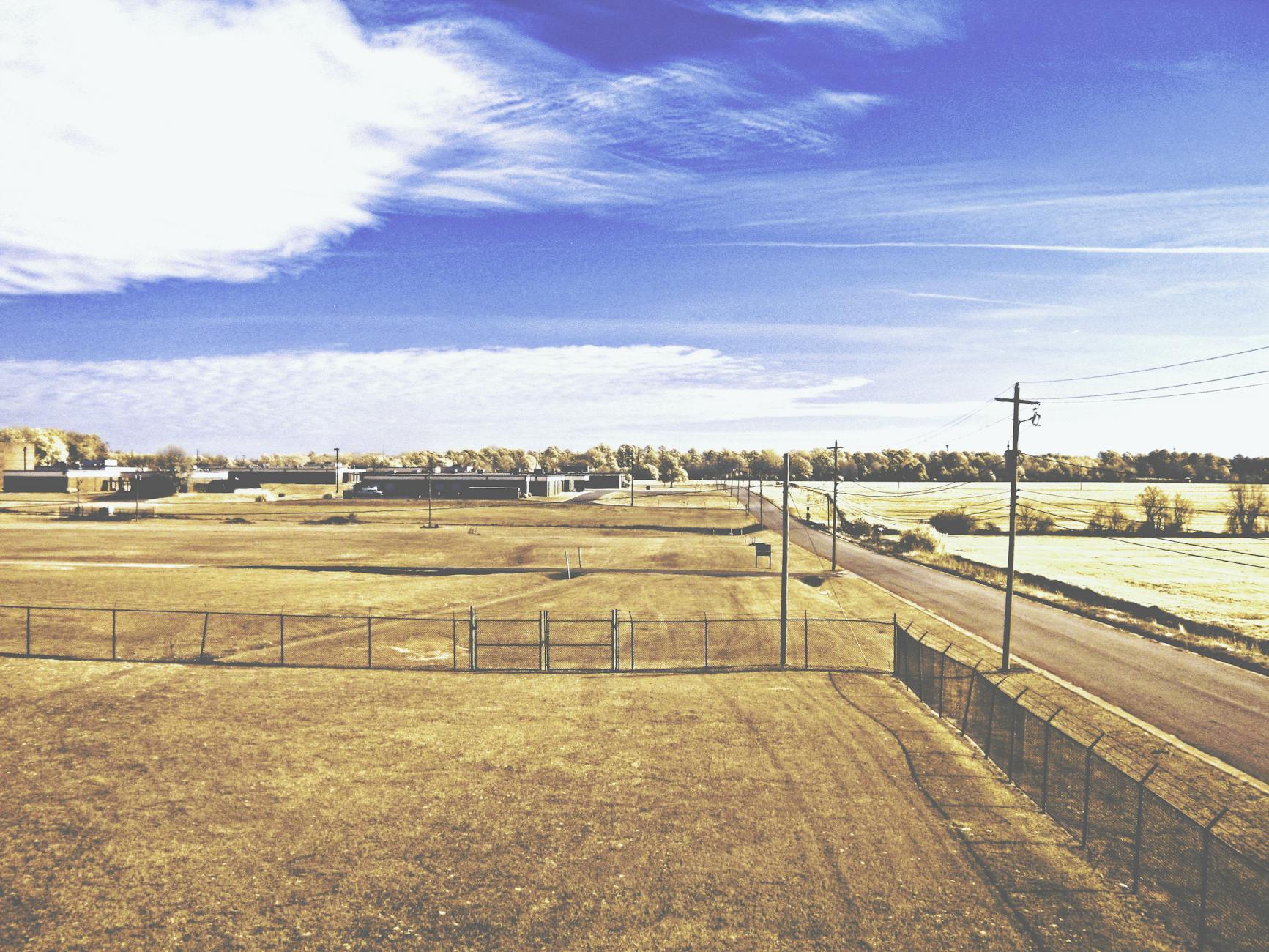
Bacon County, Georgia, sits in the southeastern corner of the state, not far from the Florida line, in a stretch of land that has never had much reason to appear on anyone's map. In the 1940s, when Harry Crews was growing up there, it was sharecropper country — flat, hot, and unforgiving, the kind of place where the land took more than it gave and where the people who worked it often seemed to be fighting a losing battle against the soil itself.
Crews was born in 1935, and his childhood reads less like a biography than like the opening chapters of a novel nobody would believe. His father died before Harry was two. His mother remarried a violent alcoholic. He contracted polio as a small child and lost the use of his legs for a period, watching his muscles waste in a way that he would describe, decades later, with the unsentimental precision of a man who had learned early that sentiment was a luxury. Then, at age five, he fell into a pot of boiling water used for scalding hog carcasses and suffered severe burns over much of his body.
He survived. He always survived. That capacity for survival — grim, stubborn, almost defiant — would become the bedrock of everything he later wrote.
An Education From the Wish Book
Formal schooling in Bacon County in the 1940s was not a particularly reliable institution, and for a child with Crews's chaotic home life, it was even less so. What he had, improbably, was a Sears, Roebuck catalog.
In interviews throughout his life, Crews returned again and again to the role that catalog played in his self-education. It was, he explained, the only book in the house. So he read it — cover to cover, repeatedly — studying the pictures, working out the words, inventing stories about the people in the advertisements. He gave them names. He imagined their lives. He was, without knowing it, learning to write fiction.
"I know now," he wrote in his 1978 memoir A Childhood: The Biography of a Place, "that it was the perfect library for a boy who was going to become a writer. It had everything."
That memoir — spare, brutal, and heartbreaking in the way that only honest books about hard childhoods can be — is widely considered one of the finest pieces of Southern autobiography ever written. It is also, remarkably, still out of print in most major bookstores. That fact tells you something about where Crews sits in the American literary canon: essential to those who've found him, invisible to almost everyone else.
The Marine, the Motorcycle, and the MFA
Crews joined the Marine Corps at seventeen, which was, by his own account, the first institution that had ever imposed any real structure on his life. He served, got out, enrolled at the University of Florida on the GI Bill, and eventually ended up in the graduate writing program there — studying under Andrew Lytle, one of the original Agrarian poets, who recognized in his rough-edged student something genuinely unusual.
The Florida years shaped Crews in ways that went beyond craft. He became part of a bohemian, hard-drinking literary scene in Gainesville that would produce several significant writers. He rode motorcycles. He got into fights. He lived, as he wrote, without much apparent regard for self-preservation — which, given where he'd come from, perhaps made a certain kind of sense.
His first novel, The Gospel Singer, was published in 1968. It announced, without any particular apology, that a new and disturbing voice had arrived in American fiction.
What Southern Gothic Actually Means
The term "Southern Gothic" gets applied loosely — to Flannery O'Connor, to Cormac McCarthy, to any fiction set south of the Mason-Dixon line that involves violence or decay. But Crews occupied a specific corner of that tradition, one that was rawer and less literary than O'Connor and more darkly comic than McCarthy.
His novels — and he wrote more than a dozen of them — populated their pages with carnival freaks, faith healers, bodybuilders, alligator wrestlers, and characters so damaged by poverty and isolation that they had developed entire cosmologies to explain their suffering. Naked in Garden Hills (1969), Car (1972), A Feast of Snakes (1976) — these were books that made readers deeply uncomfortable in the way that only honest fiction can, books that refused to look away from the ugliness of American life at its margins.
His great subject, returned to again and again, was the body — what it can endure, what it means to live inside one that has been damaged, what people do to their bodies in the absence of other forms of control. That obsession wasn't academic. It came directly from the scalded child in Bacon County, from the kid who had watched his own legs stop working and then start again.
The Professor Who Bled on the Page
Crews taught creative writing at the University of Florida for decades, and his reputation as a teacher was, by all accounts, extraordinary. Students — many of them now accomplished writers themselves — describe a man who was simultaneously terrifying and generous, who demanded honesty above all else and had no patience for writing that was merely clever.
"Don't tell me what you think I want to hear," he reportedly told students. "Tell me what you know."
His personal life was chaotic in ways that eventually took a serious toll. He struggled with alcoholism for much of his adult life, and the later decades were marked by the kinds of losses — a son, relationships, stretches of health — that would have silenced a lesser writer. They didn't silence Crews. They just made the work darker.
He died in 2012, in Gainesville, Florida. The obituaries were respectful but modest in scope — a reflection of how thoroughly he had been overlooked by the literary establishment that had celebrated writers far less original than him.
Why He Matters Now
Harry Crews is not a comfortable writer. He is not the kind of author whose books get assigned in high school or adapted into prestige television series. He does not offer resolution or uplift in any conventional sense.
What he offers instead is something rarer: total honesty about what it feels like to come from nothing, to carry damage in your body, to build a life and a voice from materials that nobody else would have thought to use. The Sears catalog. The sharecropper's field. The scalded skin.
In an era when American literature is increasingly interested in questions of identity, place, and the overlooked margins of national life, Crews looks less like an obscure regional writer and more like a prophet who arrived too early and spoke too plainly to be properly heard.
He wrote himself out of Bacon County, Georgia, and into something permanent. It's past time we caught up with him.