The Interpreter Who Never Got the Memo: How a Teenage Refugee Rewrote International Law
The Girl Who Spoke in Fragments
When seventeen-year-old Marie Warsh stepped off the bus at Union Station in 1952, she carried everything she owned in a cardboard suitcase held together with twine. Her English was functional but fragmented, learned from American movies and British textbooks in a displaced persons camp in Germany. She had no connections, no money, and no plan beyond the address of a distant cousin in Arlington.
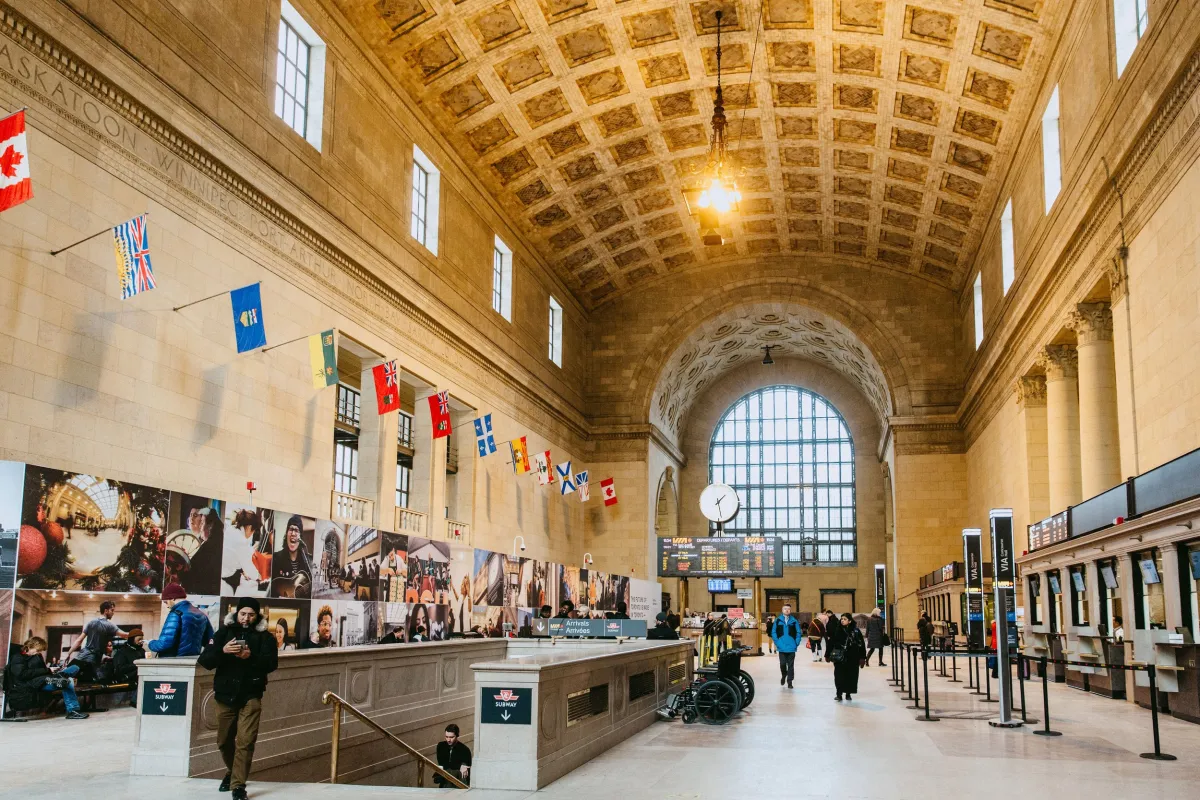 Photo: Union Station, via images.squarespace-cdn.com
 Photo: Marie Warsh, via static.wikia.nocookie.net
What she did have was an extraordinary ear for languages—and a complete misunderstanding of how Washington bureaucracy was supposed to work.
Warsh had fled Poland as a child with her parents during the war, spending seven years in various refugee camps before finally receiving clearance to enter the United States. By the time she reached America, she spoke six languages fluently and could get by in four more. It was this linguistic ability that landed her a job at the State Department's translation services division, a low-level position that was supposed to keep her busy and invisible.
Nobody told her she was supposed to stay that way.
Beyond the Dictionary
Warsh's official job was straightforward: translate documents, sit quietly in meetings, and convert conversations between diplomats who spoke different languages. What her supervisors didn't anticipate was that she would actually listen to what people were saying—and more importantly, what they weren't saying.
"I grew up reading faces before I could read books," Warsh would later explain. "When you're a refugee, you learn that survival depends on understanding what people really mean, not just what they say."
Within months of starting her job, Warsh had begun to notice patterns in the diplomatic conversations she translated. Delegates would say one thing in formal sessions but reveal their true concerns in casual remarks. She started taking notes—not of the official positions, but of the underlying anxieties and unstated compromises that seemed to drive every negotiation.
By 1954, she had filled dozens of notebooks with observations that no one else was collecting.
The Accidental Diplomat
Warsh's transformation from translator to unofficial diplomat began almost by accident during the 1955 Geneva Conference on Indochina. She was there as part of the American translation team, but during a break in formal sessions, she found herself in conversation with a Soviet delegate who was struggling with his English.
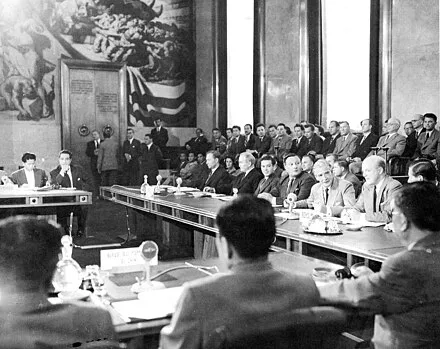 Photo: Geneva Conference on Indochina, via upload.wikimedia.org
What started as a simple language assistance session turned into something more significant when the Soviet delegate mentioned his country's real concerns about the proposed agreements—concerns that weren't making it into the official negotiations because of political posturing on both sides.
Warsh realized she was in a unique position. As a translator, she was essentially invisible to the power brokers in the room. But as someone who spoke multiple languages and understood the cultural nuances behind different diplomatic styles, she could serve as an informal bridge between delegations that were talking past each other.
She began having "accidental" conversations with delegates from various countries, always under the guise of providing language assistance. But what she was really doing was identifying common ground that the official negotiators were missing.
The Back-Channel Nobody Knew About
Over the next two decades, Warsh developed an extraordinary informal network of diplomatic contacts. She never held an official negotiating position, never appeared on delegation rosters, and never signed any treaties. But her influence on international agreements became profound.
Her method was subtle but effective. She would identify the real sticking points in negotiations—not the public positions that delegates stated for the record, but the private concerns they expressed in casual conversation. Then she would find ways to address those concerns through informal channels, often by helping one delegation understand what another delegation actually needed versus what they were asking for.
The breakthrough came during the 1962 negotiations over nuclear testing limitations. The talks had stalled over technical details that seemed insurmountable. But Warsh had noticed that the real issue wasn't technical—it was about face-saving. Each side needed to be able to claim victory to their domestic audiences.
Working entirely through informal conversations and "chance" encounters, Warsh helped craft language that allowed both sides to claim they had achieved their primary objectives. The resulting Limited Test Ban Treaty was hailed as a diplomatic triumph, but few people knew about the role played by a Polish refugee who was officially just there to translate.
The Treaties That Almost Weren't
Warsh's most significant achievement came during the lengthy negotiations that led to the 1975 Helsinki Accords. The talks had been deadlocked for months over human rights provisions, with Eastern European delegates refusing to accept language that they saw as interference in their internal affairs.
Warsh had been observing these negotiations for years, and she understood that the Eastern European resistance wasn't just ideological—it was practical. These delegates genuinely feared that agreeing to human rights monitoring would lead to internal instability that could threaten their governments.
Working through her network of informal contacts, Warsh helped develop compromise language that addressed these concerns while still maintaining the human rights principles that Western delegates considered essential. The final agreement included monitoring provisions that were strong enough to be meaningful but flexible enough to be acceptable to all parties.
Years later, when the Helsinki Accords became a crucial tool for human rights activists throughout Eastern Europe, few people realized that the language that made it all possible had been shaped by conversations that never appeared in any official record.
The Invisible Hand
Warsh retired from the State Department in 1985, having spent thirty-three years in a job that officially required nothing more than linguistic skills. But her real legacy was written in the margins of history—in the successful negotiations that might have failed without her informal interventions, in the compromises that seemed impossible until she helped the parties understand what they actually needed from each other.
She never sought credit for her role in these achievements, and in most cases, the delegates she helped probably didn't fully understand what she had done. She had succeeded by being simultaneously essential and invisible, by understanding that sometimes the most important diplomacy happens in the spaces between official positions.
When Marie Warsh passed away in 2001, her obituary described her as a longtime State Department translator. It was technically accurate but missed the larger truth: that sometimes the most effective diplomats are the ones who never get officially recognized as diplomats at all.
Her story reminds us that influence doesn't always come from authority, and that sometimes the most important work gets done by people who understand that being underestimated can be the greatest advantage of all.