The Radio Repairman Who Rewired Rock and Roll: How Ignorance Became Innovation
The Man Who Never Learned the Rules
In a cluttered radio repair shop in Fullerton, California, Leo Fender was solving problems that didn't exist yet. The year was 1946, and while trained luthiers across America were handcrafting guitars the way their grandfathers had, Fender was approaching the instrument like the electrical engineer he'd accidentally become. He couldn't play a single chord, had never studied music theory, and possessed what would prove to be his greatest asset: complete ignorance of how guitars were supposed to work.
 Photo: Fullerton, California, via www.landsat.com
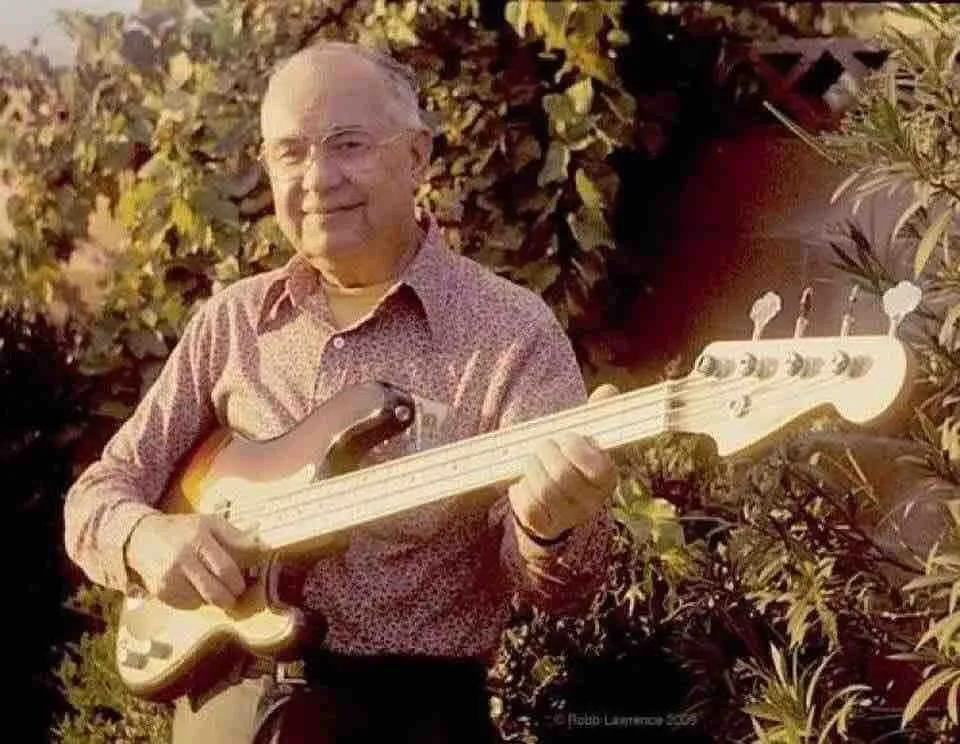 Photo: Leo Fender, via images.squarespace-cdn.com
Sometimes the best person to revolutionize something is the one who never learned to love it the old way.
From Chickens to Circuits
Fender's path to musical immortality began with poultry. Born on a farm outside Anaheim in 1909, he spent his childhood more interested in how things worked than how they sounded. While other kids learned instruments, Leo learned to fix radios. When he opened Fender Radio Service in 1938, his customers included local musicians whose amplifiers kept breaking down.
This was Leo's introduction to the music business: not through melody or rhythm, but through the practical problem of keeping electronic equipment running in honky-tonk bars and dance halls. He approached music as an engineering challenge, which turned out to be exactly what music needed.
The Obvious Questions
When musicians complained that their hollow-body electric guitars fed back too much or couldn't cut through a band mix, Fender asked questions that trained guitar makers would have considered too basic to bother with: Why does a guitar need to be hollow? Why can't the strings be louder? Why does it take so long to make one?
These weren't sophisticated questions, but they were revolutionary ones. Traditional guitar making was bound by centuries of acoustic principles that had nothing to do with electricity. Fender, who understood circuits better than music history, saw the guitar as an electrical device that happened to make sound.
The Telecaster Revolution
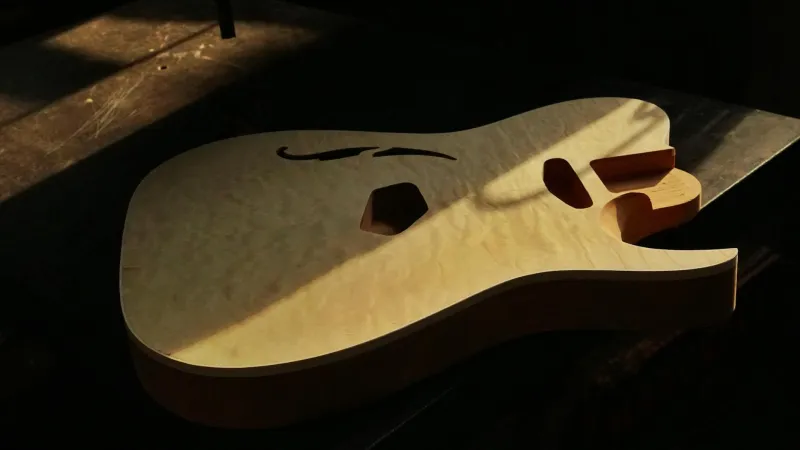
In 1950, Fender released the Telecaster, the first mass-produced solid-body electric guitar. To traditional guitar makers, it looked like a piece of wood with electronics bolted on. To musicians, it sounded like the future.
The Telecaster was everything a handmade guitar wasn't: loud, reliable, affordable, and built for volume. Where traditional guitars whispered, the Telecaster shouted. Where acoustic guitars required careful handling, the Telecaster could survive being thrown off a stage. Most importantly, where custom guitars took weeks to build, Telecasters rolled off an assembly line.
Fender had applied manufacturing principles to musical instruments and accidentally created the sound of rock and roll.
Engineering the Impossible
Fender's ignorance of musical tradition freed him to solve problems that "couldn't" be solved. When musicians wanted more bass response, traditional thinking said you needed a bigger instrument. Fender created the Precision Bass, which was smaller than an upright bass but could be heard over drums and electric guitars.
When guitarists wanted more tonal options, conventional wisdom suggested adding more pickups would create interference. Fender added three pickups to the Stratocaster and created a switching system that gave musicians sounds no one had heard before.
Each innovation came from treating musical instruments as electrical appliances rather than sacred objects.
The Factory of Dreams
By the mid-1950s, Fender's factory in Fullerton was producing instruments that would define popular music for the next seventy years. Buddy Holly's hiccupping melodies, Jimi Hendrix's feedback symphonies, Bruce Springsteen's working-class anthems — all were shaped by tools created by a man who approached music like a repair problem.
The factory itself was revolutionary. While traditional luthiers worked alone, crafting one instrument at a time, Fender created an assembly line where specialists focused on specific components. This wasn't just efficient; it was consistent. Every Telecaster sounded like every other Telecaster, which meant musicians could trust their instruments to perform the same way every night.
The Sound of American Optimism
Fender's guitars didn't just change how music sounded; they changed who could make music. Traditional instruments required years of training and significant investment. Fender instruments were designed for regular people who wanted to make extraordinary sounds. They democratized music making in the same way mass production had democratized automobiles.
The clean, bright tone of Fender guitars became synonymous with American popular music — optimistic, forward-looking, and built for volume. These weren't instruments for concert halls; they were instruments for garage bands, honky-tonks, and stadium shows.
Legacy of the Outsider
When CBS bought Fender in 1965 for $13 million, Leo Fender had fundamentally altered the trajectory of popular music without ever learning to play the instruments he'd created. His story proves that sometimes the most important innovations come from people who don't know enough to know what's impossible.
Today, Fender guitars remain the gold standard for electric instruments, played by everyone from weekend warriors to stadium headliners. The radio repairman from Fullerton never intended to change music history — he was just trying to build better equipment for his customers.
But that's exactly what makes his story so powerful. Leo Fender's greatest innovation wasn't any single guitar or amplifier; it was proving that the best way to revolutionize something might be to approach it with fresh eyes and practical questions. Sometimes ignorance isn't a limitation — it's a superpower.