The Substitute Who Stayed: How a Temporary Teacher Cracked a Medical Puzzle That Stumped the Experts
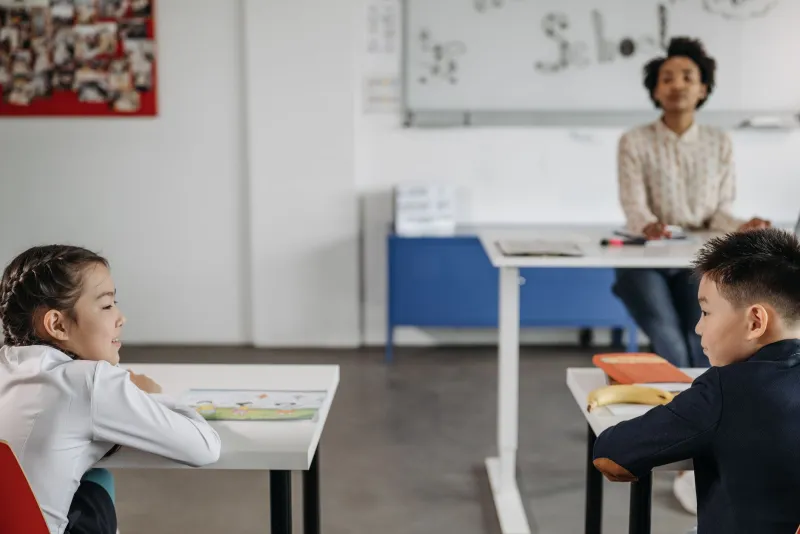
Renata Osei wasn't supposed to be at Jefferson Middle School for more than two weeks. She was filling in for a teacher on leave, covering a sixth-grade science class she hadn't prepared for, in a district she'd never worked in before. But something about the kids in Room 14 wouldn't leave her alone — and the question she couldn't stop asking eventually changed what medicine knows about a condition that had been hiding in plain sight for years.
Osei had no medical background. She had a bachelor's degree in environmental science, a substitute teaching certificate, and a habit of paying close attention to things that didn't add up.
That last quality turned out to matter more than the other two combined.
Something Felt Off
It was a Tuesday in early October when Osei first noticed Marcus. He was eleven, quiet, and had asked to move his desk closer to the window because the overhead lights gave him headaches. The school nurse had cleared him. His parents had taken him to their pediatrician twice. The diagnosis, each time, was tension headaches — common, manageable, nothing to worry about.
Three days later, a girl named Priya asked to step out of class because she was dizzy. The week after that, a boy named Caleb fell asleep twice during a forty-minute lesson — not the drowsy inattention of a kid who'd stayed up too late, but a heavy, sudden kind of sleep that alarmed the students around him.
Osei wrote all three names in her notebook that evening. Not because she knew what she was looking at. Because she'd learned, somewhere along the way, that when three things feel related, they usually are.
"I wasn't thinking 'medical mystery,'" she said in an interview with STAT News in 2021. "I was thinking, 'this is a weird cluster and I don't understand it yet.' Which is basically the same instinct, I guess."
The Pattern No One Had Assembled
Over the following three weeks — her assignment extended twice as the original teacher's recovery dragged on — Osei identified five students in the same classroom who shared a constellation of symptoms: sensitivity to fluorescent light, intermittent dizziness, unusual fatigue, and in two cases, brief episodes of what their parents described as "spacing out" that had been attributed to daydreaming or early signs of anxiety.
Each child had been seen by a doctor. Each had received a different, unrelated diagnosis. No one had looked at them as a group, because no one had seen them as a group. They had different pediatricians, different insurance, different families who had no reason to compare notes.
Osei had a reason. She saw them every day in the same room.
She brought her notebook to the school's principal, who listened politely and suggested she pass the information along to the nurse. She brought it to the nurse, who noted that all the children had been evaluated and cleared. She emailed the district's health coordinator, who thanked her and did not follow up.
At this point, most people would have dropped it. Osei was a substitute. She had no authority, no institutional standing, and a two-week assignment that had already stretched to six. Nobody was asking for her opinion on student health.
She went home and started researching.
The Question That Opened the Door
Osei didn't find the answer herself — she's careful to say that, every time she tells the story. What she found was a 2009 paper in a pediatric neurology journal describing a rare but documented condition involving mitochondrial dysfunction that could present in clusters among children in shared environments, particularly in response to specific environmental triggers like certain wavelengths of artificial light.
The paper had forty-three citations. It had never been widely discussed outside specialist circles.
She printed it out, highlighted the relevant passages, and wrote a three-page letter to the county health department. She attached her notebook observations, organized by student (anonymized), date, and symptom. She referenced the journal paper. She asked, specifically, whether an environmental assessment of Room 14 had ever been conducted.
It hadn't.
The assessment, ordered six weeks after her letter and only after a health department official happened to mention it to a colleague who specialized in pediatric environmental medicine, found elevated levels of a specific compound off-gassing from recently installed flooring materials — a compound that, in a small percentage of children with a particular genetic variant, could trigger the exact symptom cluster Osei had documented.
What the Experts Had Missed
Dr. Yolanda Marsh, the pediatric neurologist who eventually led the formal investigation, is generous in her account of what happened. "The reason no physician caught this is straightforward," she told the American Academy of Pediatrics journal in 2022. "Each child presented individually, in different offices, with symptoms common enough to have a dozen explanations. The only way to see the pattern was to see the children together, in context. A classroom teacher does that every day. A doctor almost never does."
The case led to updated screening guidelines for cluster presentations of neurological symptoms in school-age children and contributed to a broader review of off-gassing standards for school building materials in eleven states.
Five families received answers they'd been looking for, in some cases, for years. All five children improved significantly after the environmental issue was remediated.
The Outsider Advantage
Osei has thought a lot about why she saw what she saw. Her answer is consistent and, she admits, a little uncomfortable for institutions to hear.
"I wasn't embedded," she said. "I didn't have a prior relationship with these kids, so I wasn't explaining away what I saw based on what I already believed about them. I didn't have a diagnosis I was attached to. I was just watching."
There's a version of this story where Osei's lack of credentials is the obstacle. In reality, it was the advantage. She had no professional investment in the existing explanations. She had no patient files telling her what to expect. She walked into that classroom with fresh eyes, and the fresh eyes saw something that familiarity had made invisible.
She still works as a substitute teacher. She says she prefers it that way — the variety, the constant newness of walking into rooms where she doesn't yet know what she's looking at.
"That's the whole point," she said. "You see differently when you're new. I never want to stop being new."