The Most Honest Liar in America
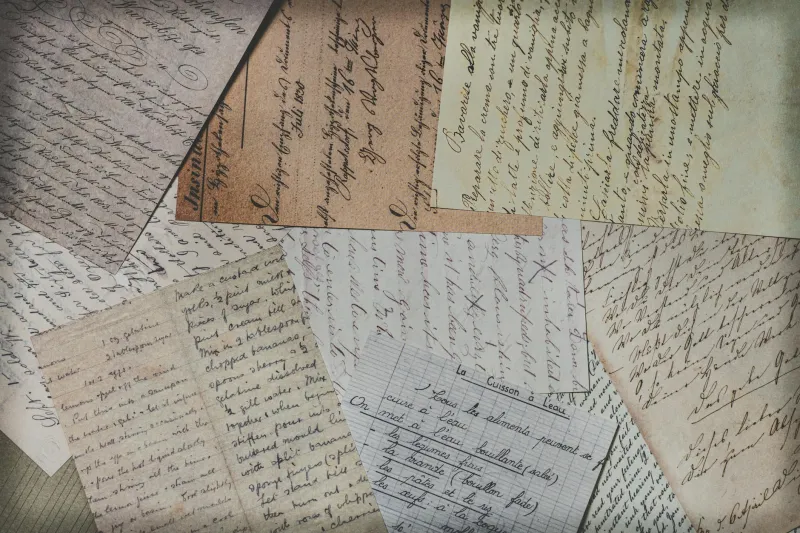
Marcus Wellfield never intended to become a guardian of American history. He was a con man, pure and simple, with an artist's eye for detail and a criminal's disregard for truth. Between 1923 and 1941, he forged hundreds of historical documents – letters from George Washington, maps drawn by Lewis and Clark, diary entries from Civil War generals. His fakes were so convincing that museums paid thousands for pieces of paper that Wellfield had aged with tea and distressed with sandpaper in his Chicago basement.
The irony that would define his legacy was still decades away: Wellfield's criminal obsession with historical accuracy would eventually make him one of America's most important preservationists.
The Education of a Forger
Wellfield didn't start out planning to fake historical documents. He was a struggling artist in 1920s Chicago, talented enough to make exact copies of anything but not creative enough to develop his own style. When a dealer offered him fifty dollars to "touch up" a damaged Civil War letter, Wellfield discovered he had a gift for historical recreation that was far more profitable than original art.
The work required obsessive research. To forge a letter from Benjamin Franklin, Wellfield had to study Franklin's handwriting for months, learning not just how he formed letters but how his penmanship changed with age, mood, and the type of document he was writing. He researched paper manufacturing techniques from different eras, tracked down period-appropriate inks, and studied the historical context of every document he created.
Wellfield became, almost accidentally, one of the most knowledgeable experts on American historical documents in the country. He just happened to be using that expertise for fraud.
The Perfectionist Criminal
What set Wellfield apart from other forgers was his compulsive attention to detail. Where most criminals cut corners, Wellfield added layers of authenticity that went far beyond what buyers expected or experts could detect.
He didn't just forge George Washington's signature – he studied Washington's correspondence patterns, his preferred topics, even his spelling mistakes. When Wellfield created a "newly discovered" letter from Washington to his nephew, he included references to weather patterns from the specific date, political events that would have been on Washington's mind, and personal details that aligned perfectly with the historical record.
Museums and collectors bought Wellfield's forgeries not just because they looked authentic, but because they felt authentic. His fakes told coherent stories that fit seamlessly into the larger narrative of American history.
When History Burned
The first hint of Wellfield's accidental contribution to historical preservation came in 1929, when a fire destroyed much of the manuscript collection at the Chicago Historical Society. Among the items lost were several original documents from the Illinois territory's founding period – documents that Wellfield had studied extensively while creating forgeries for a private collector.
When researchers tried to reconstruct what had been lost, they discovered that Wellfield's fakes were often the only surviving record of the original documents' contents. His forgeries were so meticulously researched that they preserved not just the appearance of the originals, but their historical information.
The Great Flood of 1937
The pattern repeated itself on a larger scale during the Ohio River flood of 1937. The Louisville Free Public Library's rare book collection was completely destroyed, including several unique Revolutionary War documents. Historians mourning the loss discovered that Wellfield had created "copies" of many of these documents years earlier for various buyers.
Wellfield's criminal network had inadvertently created a backup system for American historical documents. While legitimate archivists focused on preserving single copies in climate-controlled vaults, Wellfield had been distributing multiple copies of historical information across the country through his illegal sales.
The Forger's Dilemma
By the late 1930s, Wellfield faced an unusual problem. His forgeries were being cited by historians as important sources for understanding American history. Museums were displaying his fakes as genuine artifacts. Scholars were building research on documents that existed only because Wellfield had imagined they should exist.
He had created a parallel archive of American history that was simultaneously completely fake and historically invaluable. His forgeries preserved real information about real people and events, even though the physical documents were products of his imagination and skill.
The Confession That Changed Everything
Wellfield's career ended in 1941 when the FBI finally caught up with him. Facing federal charges, he made a decision that surprised everyone: he confessed to everything and provided detailed documentation of every forgery he had created.
His confession filled three filing cabinets with meticulous records. For each fake document, Wellfield had kept notes on his research sources, his manufacturing techniques, and the historical context he had tried to capture. He had essentially created a comprehensive guide to American historical documents – both real and imagined.
The Unintended Archive
When historians and archivists studied Wellfield's confession, they realized they were looking at something unprecedented: a criminal's research notes that constituted one of the most comprehensive studies of American historical documents ever compiled.
Wellfield had documented not just what he had forged, but why. His notes revealed patterns in American historical documentation, gaps in the official record, and insights into how historical figures actually communicated. His criminal enterprise had accidentally produced legitimate scholarship.
Legacy Written in Lies
Today, Marcus Wellfield's forgeries occupy a strange place in American history. Museums that own his fakes display them as examples of his artistry rather than as historical documents. But historians still consult his research notes, and his documentation of destroyed originals remains valuable source material.
Wellfield served three years in federal prison and died in obscurity in 1952. He never saw himself as anything more than a talented criminal. But his obsessive commitment to historical accuracy, even in service of fraud, preserved pieces of the American story that might otherwise have been lost forever.
In the end, the counterfeiter's greatest con was on himself: while trying to fake American history, he ended up saving it.