The Invisible Calculator: How Alabama's Poorest County Produced the Mind That Guided America to the Moon
The Boy Who Counted Cotton Rows
In 1935, deep in Alabama's Black Belt, a seven-year-old boy named James Edward Williams discovered something that would change the trajectory of American space exploration—though nobody, including James, would realize it for decades. Walking behind his father's plow in the red clay fields of Wilcox County, he started calculating. Not just counting rows of cotton, but computing: how many plants per row, how many rows per acre, how the geometric progression changed based on spacing variations.
His father, a sharecropper who'd never learned to read, watched his son draw equations in the dirt with a stick and felt equal parts pride and worry. Smart Black boys in 1930s Alabama had limited options, and most of them led nowhere good.
When Schools Failed, Books Didn't
The one-room schoolhouse that served Black children in Wilcox County operated on a schedule designed around agricultural needs—open only when cotton didn't need tending. James attended sporadically, learning basic arithmetic and reading from textbooks so old they still referred to the "War Between the States." By age twelve, he'd exhausted everything the school could teach him.
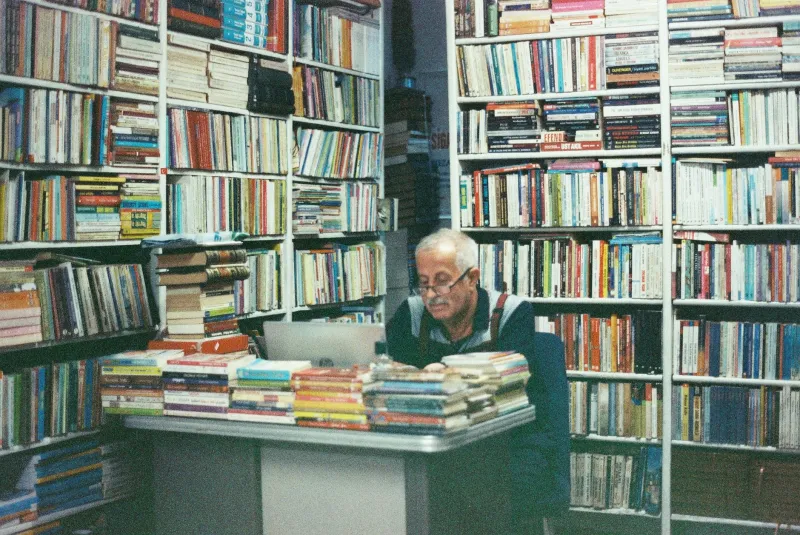
But the county library—technically integrated but practically whites-only—became his secret classroom. James discovered that if he arrived just before closing time, the elderly librarian would let him sit quietly in the back corner with mathematics textbooks. Calculus, differential equations, geometric proofs that had stumped college students—James absorbed it all with the focused intensity of someone who knew this might be his only chance.
He taught himself advanced mathematics the way other kids learned to fish: through patient observation, trial and error, and the understanding that mastery meant survival.
The War That Opened Doors
World War II created opportunities that peacetime never would have offered. The military needed mathematicians to calculate artillery trajectories, and for the first time in American history, they couldn't afford to be picky about the color of the minds doing the calculating. James enlisted in the Army at seventeen, his self-taught mathematical abilities immediately obvious to officers who'd never met a Black teenager who could solve differential equations in his head.
He spent the war years at Aberdeen Proving Ground in Maryland, part of a segregated unit that calculated firing tables for new weapons systems. The work was classified, complex, and crucial—the kind of mathematical problem-solving that required intuitive understanding of physics, ballistics, and computational methods that wouldn't be taught in most universities for another decade.
 Photo: Aberdeen Proving Ground, via www.sjpi.com
James excelled at work that confused college graduates. His approach was different—less formal, more intuitive, but consistently accurate. He could see mathematical relationships that others had to derive through lengthy proofs.
The Quiet Revolution at NASA
After the war, James returned to Alabama briefly, but there was nothing there for a Black mathematician with his abilities. When NASA's predecessor organization, NACA, began recruiting computational staff for their Langley facility in Virginia, James applied. The segregated South was still segregated, but the space race was beginning, and America needed every mathematical mind it could find.
He was assigned to the West Area Computing Unit—the segregated section where Black mathematicians, mostly women, performed the calculations that white engineers used to design aircraft and eventually spacecraft. It was 1951, and James was one of only a handful of Black men in a unit that would later be celebrated as the "Hidden Figures," though that recognition was still decades away.
The work was extraordinary: calculating flight paths for experimental aircraft, determining stress loads on new wing designs, and eventually, computing the trajectories that would carry human beings into space. James specialized in orbital mechanics—the mathematical poetry of predicting where objects would be in the constantly moving three-dimensional space around Earth.
When the Impossible Became Routine
As America's space program accelerated through the 1960s, James found himself working on increasingly complex problems. Mercury missions required precise calculations to ensure capsules would land where recovery ships waited. Gemini missions needed orbital rendezvous computations that accounted for the gravitational effects of Earth, moon, and sun simultaneously.
And then came Apollo.
The mathematical challenges of sending humans to the moon and bringing them back safely were staggering. Every variable had to be calculated with precision that left no margin for error—fuel consumption rates, gravitational assists, course corrections, and the delicate dance of orbital mechanics that would allow the lunar module to separate from the command module, land on the moon, and then rendezvous in lunar orbit for the journey home.
James worked these problems with the same intuitive understanding he'd developed as a child counting cotton rows. While MIT-trained engineers struggled with the computational complexity, James could see the elegant mathematical relationships that made seemingly impossible problems solvable.
The Credit That Never Came
When Neil Armstrong stepped onto the lunar surface in July 1969, the trajectory calculations that had guided Apollo 11 through space included work that James had performed at his desk in the segregated computing section at Langley. But his name appeared on none of the mission reports, none of the technical papers, none of the historical accounts that celebrated America's greatest technological achievement.
This wasn't unusual. The computational staff—especially the Black mathematicians—were considered support personnel, not engineers or scientists. Their work was essential but invisible, acknowledged in internal memos but erased from public recognition.
James continued working at NASA through the 1970s, contributing to Skylab missions, the Apollo-Soyuz Test Project, and early Space Shuttle development. He retired in 1982 with a modest pension and a collection of commendation letters from supervisors who understood his contributions even if the broader world never would.
The Mathematics of Invisibility
James Edward Williams died in 2003, his obituary running in the Montgomery Advertiser without mentioning his role in America's space program. His family knew he'd worked for NASA, but the classified nature of his early work and his own modest nature meant that even they didn't fully understand what he'd accomplished.
It wasn't until researchers began investigating the broader story of NASA's "Hidden Figures" that James's contributions came to light. Mission archives revealed his name on critical calculations, his signature on trajectory analyses that had guided American astronauts safely through space.
The boy who'd learned mathematics by counting cotton rows in Alabama's poorest county had helped navigate humanity's first steps toward the stars. His calculations had been precise enough to guide spacecraft across the 240,000-mile void between Earth and moon, then bring them home safely to splashdown zones measured in square miles of open ocean.
The Legacy of Necessary Work
James's story illustrates something profound about American innovation: our greatest achievements often depend on minds that the system never intended to cultivate. His mathematical genius developed despite educational neglect, flourished despite segregation, and contributed to history's most ambitious project despite remaining largely uncredited.
The mathematics he performed was as elegant and essential as any work done by the famous engineers whose names became synonymous with the space program. The difference was visibility—some contributions get monuments, others get forgotten, but the spacecraft couldn't tell the difference.
In the end, James Edward Williams proved that mathematical truth is colorblind, even when the institutions that employ mathematicians are not. The equations he solved didn't care about his background, his race, or his recognition. They just needed to be right. And thanks to a boy who learned to count in cotton fields and taught himself calculus in library corners, they were.