Cleared for Takeoff: The Girl Who Taught Herself to Fly and Then Refused to Land
The Last Day of School
The morning Donna Raeburn walked out of Millbrook Junior High in rural Georgia and didn't come back, nobody chased after her. That was 1971. She was thirteen years old, the oldest of five kids, and her mother had just taken a second job waitressing nights. There were younger children to look after, a house that needed managing, and a school that, if she was being honest, had never seemed particularly interested in keeping her anyway.
She wasn't angry about it. That's the part that's hard to explain to people who expect this kind of story to begin with injustice and a clenched fist. Donna just looked at the situation clearly and made a calculation. The school wasn't giving her much. Home needed her. She left.
What she couldn't have told you then — what she probably didn't know herself — was that she was also beginning the strangest, most improbable education of her life.
The Book That Started Everything
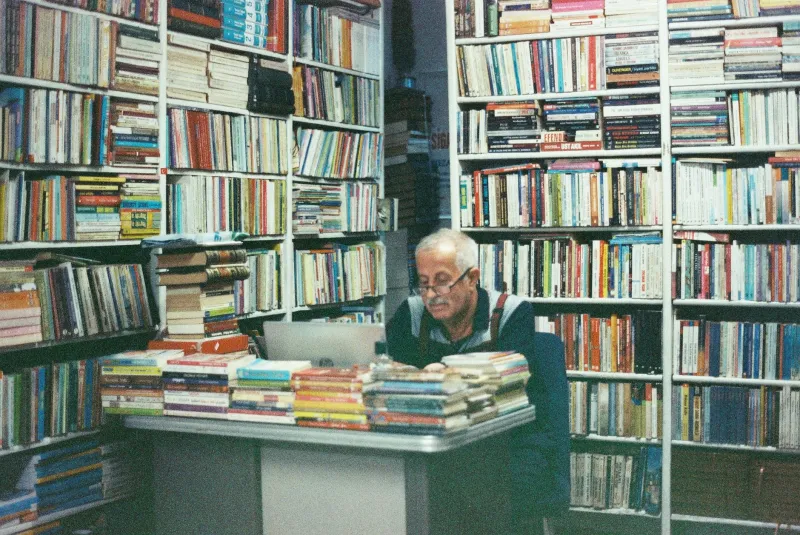
The Millbrook County Library was three miles from Donna's house, close enough to walk when the weather held. She'd been going since she was eight, not out of academic ambition but because it was quiet there in a way her house never was, and the librarian, a retired schoolteacher named Mrs. Caldwell, had a habit of pressing books into the hands of kids who looked like they needed somewhere to put their minds.
The book Mrs. Caldwell gave Donna in the spring of 1972 was an introduction to aeronautics — a thick, slightly outdated volume that had been donated to the library by a local flight instructor who'd upgraded his reference shelf. It was dense, technical, and not remotely intended for a fourteen-year-old girl with no formal science education.
Donna read it twice.
She didn't understand all of it. Large sections required knowledge she didn't have yet — physics concepts, mathematical frameworks, meteorological terminology that sent her reaching for other books, which sent her reaching for more. Within six months, she had assembled an informal curriculum out of whatever the Millbrook County Library could offer: basic physics texts, weather manuals, a FAA private pilot handbook from 1968, a biography of Amelia Earhart that she read until the spine cracked.
"I wasn't trying to become a pilot," she said in a 1994 interview. "I was just trying to understand how something that heavy could get off the ground. Once I understood that, I needed to understand the next thing. It kept going."
The Airfield Education
Seven miles outside Millbrook was a small private airfield — a single paved strip, a tin-roofed hangar, and a rotating cast of weekend flyers, crop dusters, and hobbyist mechanics. Donna started showing up there in 1973, at fifteen, on her bicycle.
The reception was not warm.
The men at that airfield were not, by and large, hostile people. They were simply operating within the assumptions of their time, which held that a teenage girl with no money, no family connection to aviation, and no formal education had no particular business being at an airfield. They told her as much, in varying degrees of politeness.
She kept coming back.
There is a specific kind of persistence that isn't aggressive or confrontational — it's just steady, patient, and completely immovable. Donna had it in abundance. She didn't argue. She didn't demand. She watched, asked careful questions when the moment was right, and made herself useful wherever she could. She learned to help with pre-flight checks. She learned the names of every component in a Cessna 172's engine compartment. She absorbed, quietly and systematically, everything the airfield had to teach.
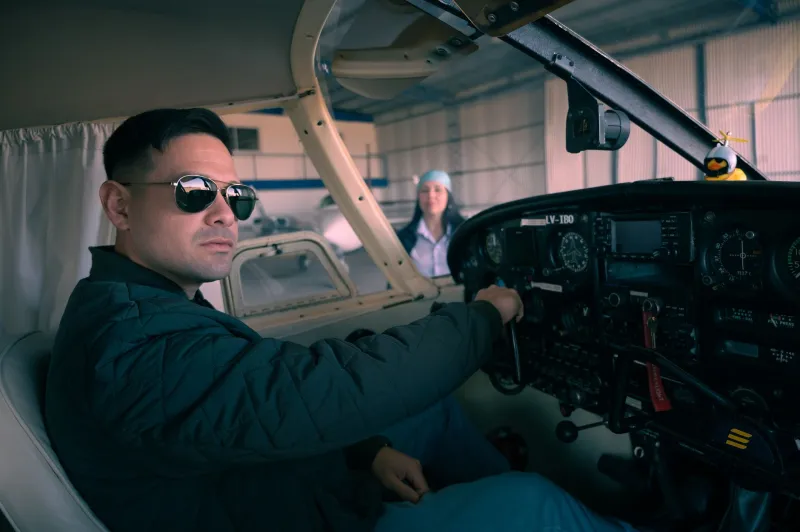
By sixteen, she had her first informal time in a cockpit, talked there by a crop duster pilot named Earl Hutchins who'd grown tired of pretending he wasn't impressed by what she knew. It wasn't a lesson. It wasn't legal. It was fifteen minutes on a Tuesday afternoon that changed the direction of her life.
The Long Road to a License
Getting an actual pilot's license required money Donna didn't have and wouldn't have for years. She worked — factory work, domestic work, eventually clerical work as her self-taught skills expanded — and saved with the kind of discipline that comes from wanting something badly enough to delay everything else for it.
She earned her private pilot certificate in 1977, at nineteen. Her instrument rating came in 1979. Her commercial license followed in 1981, the same year she passed the written exams on her first attempt — exams that many formally trained candidates required multiple attempts to clear.
The examiners were, by her account, surprised. The FAA written test doesn't ask where you learned what you know. It only asks whether you know it.
Breaking into commercial aviation as a woman in the early 1980s was a different kind of obstacle — less about credentials and more about an industry that had simply never imagined women in those seats and hadn't adjusted its imagination yet. Donna flew regional cargo routes, then commuter flights, accumulating hours with methodical patience. In 1986, she was hired as a first officer by a regional carrier based in Atlanta, one of a small handful of women in that role in the Southeast at the time.
What Self-Direction Actually Looks Like
There's a tendency, in stories like this one, to locate the heroism in the adversity — to say that Donna Raeburn succeeded because she overcame the obstacles in her path. But people who knew her well tend to describe it differently. The obstacles weren't what drove her. The sky drove her. The obstacles were just things she moved through on the way there.
What her unconventional education gave her wasn't just knowledge. It gave her a relationship to learning itself that formal schooling doesn't always cultivate. She never expected information to be handed to her. She never waited for permission to pursue something she wanted to understand. When she hit a wall, her instinct was to find the book that explained the wall, not to ask someone to lower it for her.
She retired in 2009 after a twenty-three-year commercial aviation career. She went back to Millbrook for the retirement party her former colleagues threw her. Mrs. Caldwell, the librarian who'd handed her that first aeronautics book, was ninety-one years old and still sharp as a tack.
"I always knew you'd do something with it," the old woman told her.
"You gave me a book," Donna said.
"I gave you a direction," Mrs. Caldwell replied. "You did the flying."
She wasn't wrong.