The Cliff She Wasn't Supposed to Reach: How a Shattered Spine Sent One Athlete Straight Up
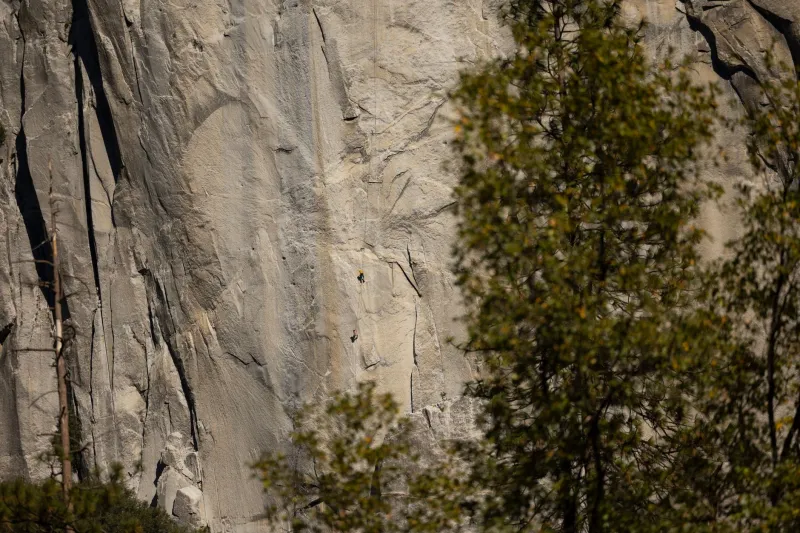
Maya Solano was twenty-six years old and ranked in the top fifteen nationally in competitive cycling when the car ran the light in downtown Tucson. The impact threw her twelve feet. The spinal fracture that followed was the kind that surgeons describe carefully, using words like "significant" and "complex" and "realistic expectations" — which, in the language of trauma medicine, means: prepare yourself for a smaller life than the one you planned.
For eight months, Maya's world was a hospital bed, then a rehab facility, then a spare bedroom in her parents' house in Phoenix. She was surrounded by people who loved her and terrified for her, which meant she was surrounded, constantly, by the weight of other people's grief about what she'd lost.
She didn't have the energy to argue with them. Not yet.
What Cycling Had Been
To understand what the accident took, you have to understand what cycling had given her.
Maya had grown up in Nogales, Arizona, right on the border, in a family that didn't have money for organized sports or club memberships. She'd gotten her first real road bike at fourteen from a neighbor who was moving and couldn't take it. She taught herself to ride it properly from YouTube videos and by following faster cyclists up the mountain roads outside town until she could keep pace.
By eighteen, she had a regional reputation. By twenty-two, she was racing at a national level on a shoestring budget, driving herself to events in a truck with a cracked windshield, sleeping in the back when motels weren't affordable. Cycling wasn't just her sport. It was her proof of concept — the thing that demonstrated, to herself more than anyone else, that she could build something real from almost nothing.
When the car hit her, it didn't just break her spine. It broke the narrative she'd been writing about herself for twelve years.
The Rehab Nobody Prescribed
The formal physical therapy was rigorous and slow. Maya did everything the therapists asked and then did more when they weren't watching. Not because she was certain she'd recover fully, but because motion was the only thing that felt like forward.
About fourteen months after the accident, a friend took her to a climbing gym in Phoenix — one of those indoor bouldering facilities with foam floors and color-coded routes up textured walls. It was meant as a casual outing, low-stakes, just something to get her out of the apartment.
Maya doesn't describe it as a revelation. She describes it as a problem. The routes were puzzles, and she'd always been good at puzzles, and the particular kind of physical intelligence that cycling had built in her — body awareness, balance, the ability to read terrain and adjust in real time — translated to the wall in ways she hadn't expected.
She went back the next day. And the day after that.
Learning to Read Stone
What rock climbing demanded of her body was different enough from cycling that her injury didn't define the parameters the way it had on a bike. The compression and impact forces that made road cycling potentially dangerous for her spine were largely absent on the wall. Her physical therapist, once Maya explained what she was doing, was cautious but not opposed — and eventually became one of her more enthusiastic supporters as her strength and mobility measurements kept improving.
She started climbing outdoors within a year of picking up the sport. The red rock formations outside Sedona. The granite faces in Joshua Tree. The sandstone canyons of Zion. Each environment taught her something the gym couldn't, and she absorbed it with the same self-directed intensity she'd applied to cycling on those mountain roads outside Nogales at fifteen.
The competitive circuit came later, and almost by accident. A friend entered her in a regional bouldering competition without telling her, paying the registration fee as a birthday gesture. Maya finished second. She was annoyed about the ambush and quietly electrified by the result.
The Podium She Wasn't Supposed to Reach
Three years after her first time inside a climbing gym, Maya Solano stood on the top step of the podium at a national-level sport climbing competition in Salt Lake City. She was thirty-one years old. She had been climbing seriously for less than four years. The women she beat had been climbing since childhood.
The sports press, such as it covers climbing, made a moderate fuss about the backstory. Maya gave a few interviews, said the right things about resilience and determination, and then went back to training because there were harder routes she hadn't finished yet.
What she says privately — to coaches, to the younger climbers she now mentors informally — is more interesting than the podium narrative. She says the accident didn't make her stronger in the inspirational-poster sense. It made her more honest. She couldn't afford to train out of ego anymore, or to push through signals her body was sending, or to ignore the difference between productive discomfort and actual damage. The injury had calibrated her in ways that pure ambition never had.
The Path That Wasn't on the Map
There's a version of Maya Solano's story that frames the accident as the beginning of something. That's not quite how she sees it.
The beginning was a cracked-windshield truck and a mountain road outside Nogales and a teenager who decided that speed up a hill was a reasonable way to measure her own potential. The accident was a detour — brutal, unwanted, and genuinely terrifying in the months when nobody knew how it would resolve.
But detours, as it turns out, sometimes lead somewhere the original map didn't include.
She was never supposed to reach the cliff. Which is exactly why she keeps climbing it.