Seven Years in the Dark: The Filmmaker Hollywood Buried Who Shot His Way Back to Legend

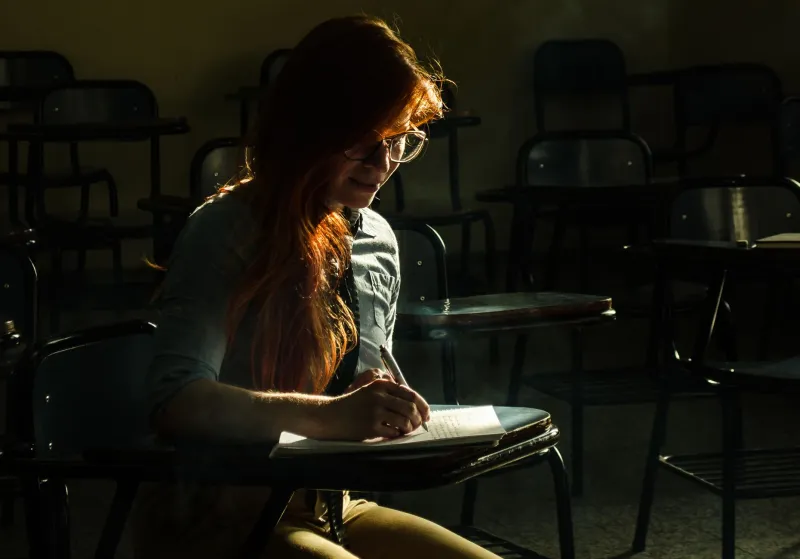
Photo by Photo by Hennie Stander on Unsplash on Unsplash
The Last Picture He Was Allowed to Make
In the spring of 1953, Victor Alden walked out of a Burbank studio lot for the last time carrying a cardboard box and a reputation that had been, as he put it later, "surgically removed."
He had made six films in eight years — three of them commercially successful, one of them nominated for a Directors Guild award — and he had done it with the kind of economy and visual intelligence that made other filmmakers uncomfortable in the particular way that competence sometimes does. He was not a difficult man. He was a precise one. And in the Hollywood of the early 1950s, precision of a certain kind attracted attention from people you didn't want paying attention.
Alden had signed a petition in 1947. He'd attended two meetings of an organization later deemed subversive by the House Un-American Activities Committee. He had not been a committed political operative — by most accounts, including his own, he had been a mildly curious young man who went where interesting conversations were happening. But the committee didn't deal in nuance, and the studios didn't deal in risk. When his name appeared on the informal blacklist that circulated among studio executives in 1952, his phone stopped ringing within six weeks.
By the time he packed that box, he was thirty-four years old, professionally dead, and living in a rented house in Pasadena with his wife, a former script supervisor named Ruth, and a basement full of equipment he'd bought cheap from a studio liquidation sale three years earlier — almost as if some part of him had known.
The Rules of Exile
The blacklist years in Hollywood are well documented now. What's less often examined is the texture of that existence — the specific, grinding dailiness of being a person whose professional identity has been revoked without formal charges, without trial, without any mechanism for appeal.
Alden couldn't use his name. He couldn't approach studios or distributors. He couldn't hire union crew members without putting them at risk. The industry he had built his adult life around had simply decided, without ceremony, that he didn't exist.
So he started over with what he had: a basement, two 16mm cameras, a reel-to-reel recorder, and Ruth, who turned out to be an extraordinarily capable producer when the job required doing everything at once.
The first two years were, by his account, mostly failure. He shot short experimental pieces — studies in light and shadow, exercises in composition — and screened them for nobody. He was teaching himself a new grammar of filmmaking, one that didn't depend on studio resources. Fewer cuts. Longer takes. Sound design built from ambient noise rather than orchestrated scores. He was learning, as he wrote in his journal in 1955, "to make the limitation do the work."
The Film That Shouldn't Exist
What became known as The Meridian Hours began shooting in the fall of 1955 and didn't wrap until the summer of 1958. Seven years, start to finish, if you count the two years of preliminary work. Three years of principal photography, shot on weekends and evenings with a rotating cast of actors who were either blacklisted themselves, too young to know better, or simply loyal to Alden in the way that people sometimes are to someone who has been conspicuously wronged.
The film followed three characters across a single night in a fictional Midwestern city — a returning Korean War veteran, a night-shift factory worker, and an elderly woman waiting for news of her son. The narrative structure was loose, almost documentarian. The camera moved differently than studio-era cameras moved — closer, more patient, willing to sit with silence in a way that mainstream American cinema in the 1950s almost never did.
Alden shot it on 16mm and edited it on a flatbed in the basement. Ruth handled sound. A friend with a chemistry background helped them develop the film in a converted utility sink. The budget, across three years of shooting, was approximately four thousand dollars — money scraped from Ruth's freelance script work and a small inheritance from Alden's mother.
When it was finished, they didn't know what to do with it.
The Underground Circuit
Distribution, for a blacklisted filmmaker with no industry connections, meant something different in 1958 than it does today. There were no streaming platforms, no film festivals with open submission portals, no internet to route around the gatekeepers.
What there was, in American cities in the late 1950s, was an emerging network of film societies — university clubs, art-house collectives, informal screening groups that operated outside the studio system and were, in many cases, actively interested in work the studios wouldn't touch. Alden mailed prints to twelve of them. Eight responded. Within a year, The Meridian Hours had been seen by enough people in enough cities that word began moving in the direction of critics.
The Village Voice ran a review in 1959 that called it "the most honest American film of the decade, made by a man the decade tried to erase." Pauline Kael, then writing for a small Bay Area publication, saw it at a San Francisco film society screening and wrote that it "reminded her of what American movies could be if American movies weren't so afraid of what Americans actually look like."
By 1961, the political climate had shifted enough that Alden's blacklisting had lost its institutional teeth. A mid-sized distributor acquired The Meridian Hours for theatrical release. It played in forty cities. It didn't make much money, but it made enough reputation.
What the Basement Actually Built
Alden made four more films before his death in 1987, all of them commercially modest and critically admired. He taught for a decade at UCLA, where his course on low-budget production technique became legendarily oversubscribed. His influence on the American independent film movement of the 1970s and 1980s is the kind of influence that's hard to measure because it moved through people rather than institutions — directors who took his class, cinematographers who saw The Meridian Hours at a film society in 1960 and never quite forgot the way it held a shot.
He was not embittered, which surprised people who expected him to be. He said, in an interview late in his life, that the blacklist years had taught him something the studio system never would have: that constraints are not the enemy of creativity. They are, when you have no choice but to work with them, its engine.
Seven years in a basement. A borrowed camera and a converted utility sink. A wife who knew how to do everything and did. And a film that proved, in the most direct possible way, that the industry's power to silence a voice is always, always smaller than it thinks.
They buried him. He kept shooting. And the darkness, it turned out, was exactly the right place to learn to see.