The Orphan Who Outlawyered Hollywood: How Two Bar Exam Failures Led to Supreme Court Victories
The Girl Nobody Expected to Succeed
In the Jewish Children's Home of New Orleans, there was no quiet corner for studying law books. Bessie Margolin learned to concentrate while chaos swirled around her — a skill that would serve her well in courtrooms where powerful men tried to shout her down. Born in 1909 to parents who died when she was young, Margolin had no family money, no legal connections, and no reason to believe the law would welcome a girl like her.
 Photo: Jewish Children's Home of New Orleans, via image.pbs.org
She believed anyway.
Failing Forward
When Margolin graduated from Tulane Law School in 1933, she was one of only three women in her class. The legal profession barely acknowledged women existed, let alone belonged in courtrooms. Her first attempt at the Louisiana bar exam ended in failure. So did her second.
 Photo: Tulane Law School, via law.tulane.edu
Most people would have taken the hint. Margolin took it as research.
She spent the next year studying not just law, but how the exam was constructed, how it was graded, what the examiners actually wanted to see. When she sat for the third time, she didn't just pass — she scored in the top percentile. The orphan girl had out-prepared candidates who'd grown up expecting success.
Finding Her Fight
Margolin's early career was spent in government service, where she discovered her true calling: labor law. In an era when workers had few protections and even fewer advocates, she found cases that weren't just legal puzzles but moral imperatives. While other lawyers chased corporate clients and big fees, Margolin chased justice for people who reminded her of herself — the overlooked, the underestimated, the systematically excluded.
Her colleagues at the Department of Labor quickly learned that Margolin didn't just prepare cases; she lived them. She would spend weeks in factories and film studios, talking to workers, understanding their daily reality in a way that made her courtroom arguments impossible to dismiss.
Taking on the Studios
By the 1940s, Margolin had set her sights on Hollywood, where the studio system treated workers like indentured servants. Actors, writers, and crew members were bound by contracts that would have made plantation owners blush. The studios had armies of lawyers and unlimited resources. They also had something they didn't realize was a weakness: they had never faced someone like Bessie Margolin.
Margolin's approach was methodical and relentless. She didn't just argue that the studios' practices were illegal — she demonstrated how they violated the basic dignity of American workers. Her briefs read like moral manifestos backed by unassailable legal research.
The Supreme Court Whisperer
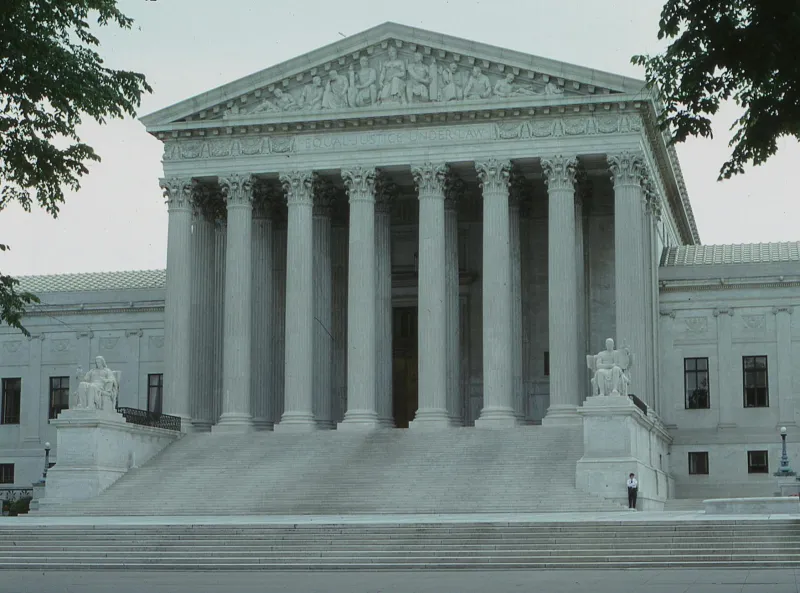
Over her career, Margolin argued 25 cases before the Supreme Court and won 23 of them. This wasn't luck; it was the result of preparation so thorough it bordered on obsessive. She would spend months crafting arguments, anticipating every possible question, understanding not just the law but the personalities and judicial philosophies of each justice.
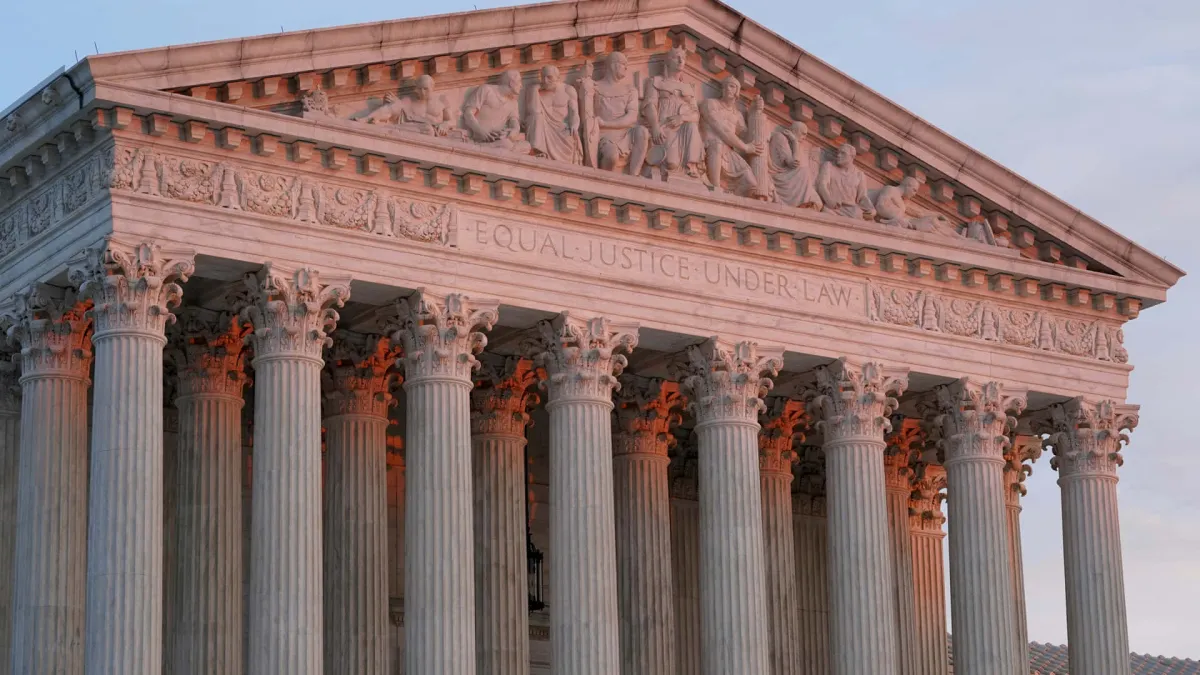 Photo: Supreme Court, via wallpapers.com
Her most famous victory came in 1946 with Anderson v. Mt. Clemens Pottery, where she successfully argued that companies had to pay workers for the time spent putting on and taking off protective gear. It sounds simple now, but at the time it was revolutionary — and it added billions to workers' paychecks over the following decades.
The Power of Moral Clarity
What made Margolin so effective wasn't just her legal skill, but her absolute conviction that the law should serve justice, not just precedent. She approached each case as if the entire concept of fairness was on trial, because for her, it was. Growing up with nothing had given her a clarity about right and wrong that privileged lawyers often lacked.
Her arguments weren't just legally sound; they were morally urgent. She made judges understand that their decisions would ripple through millions of lives, that the abstract legal principles they were debating had real consequences for real people.
Breaking Down the Walls
Margolin's success opened doors for other women in law, but she never saw herself primarily as a pioneer for gender equality. She was a pioneer for economic justice who happened to be a woman. Her legacy isn't just in the cases she won, but in the principle she established: that the best advocates for the powerless are often those who remember what powerlessness feels like.
The Orphan's Gift to America
When Margolin retired in 1972, she had fundamentally changed the relationship between American workers and their employers. The orphan who had failed the bar exam twice had become one of the most successful Supreme Court advocates in history, proving that institutional rejection doesn't predict institutional success.
Her story reminds us that sometimes the people best equipped to fix a system are those who were never supposed to be part of it in the first place. Bessie Margolin didn't just practice law — she practiced justice, and that made all the difference.