Dirt Under His Fingernails, Fire in His Notes: The Farmworker Who Made America's Food Safe
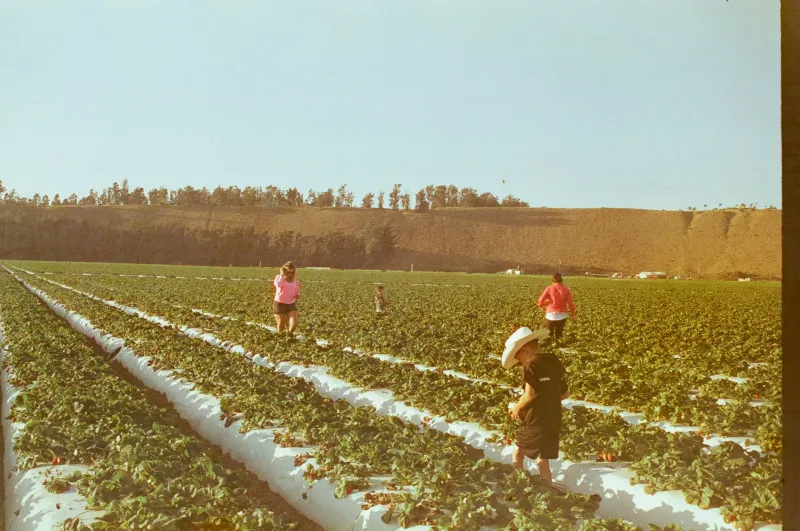
The strawberry fields outside Salinas, California don't look dangerous. They look beautiful, actually — low green rows stretching toward the horizon, workers moving steadily between them in the early morning light. But Jesús Ramirez knew better. He'd been working those fields, and others like them, since he was a teenager. And somewhere along the way, he started writing things down.
Not for any particular reason at first. He wasn't a journalist. He wasn't a scientist. He'd never finished school past the sixth grade in the small Oaxacan village where he was born. He just noticed things — the way certain fields made workers dizzy by noon, the clusters of illness that appeared after certain spray schedules, the children of laborers who developed rashes that no one could explain — and something in him refused to look away.
What followed was one of the most unlikely stories in the history of American public health.
The Invisible Workforce
By the time Jesús arrived in California in the late 1980s, migrant farmworkers had been the invisible backbone of American agriculture for generations. They planted and harvested the food that stocked the shelves of every grocery store in the country, and they did it in conditions that most Americans never thought to question. Pesticide exposure was rampant. Water sanitation was poor. Heat illness was common. And complaints, when they were made at all, disappeared into a bureaucratic void.
Workers in Jesús's position had almost no leverage. Many were undocumented. Most spoke limited English. Labor contractors controlled their access to housing and work. Speaking up meant losing everything — your job, your housing, sometimes your safety. The system wasn't broken. It was working exactly as designed, just not for the people doing the work.
Jesús understood all of this. He also understood that someone had to start somewhere.
The Notebooks
He started carrying a small spiral notebook in 1991. At first, his entries were simple — dates, locations, what was sprayed, who got sick, how long the symptoms lasted. His handwriting was careful and deliberate, the product of someone who didn't take the act of writing for granted. Fellow workers teased him gently. What are you, a reporter now? He just shrugged and kept writing.
Over the next several years, those notebooks multiplied. He documented over four hundred incidents across dozens of fields and processing facilities in three California counties. He recorded pesticide application schedules that violated federal buffer zone regulations. He noted fields where workers were sent back in before legally required re-entry intervals had elapsed. He tracked which contractors consistently cut corners and which inspectors seemed to look the other way.
This was not casual observation. This was systematic documentation, the kind that regulatory agencies were supposed to be doing and weren't. And Jesús was doing it while working full shifts, living in shared labor camp housing, and navigating the constant anxiety of his immigration status.
Finding a Voice
The turning point came in 1994, when a wave of illness swept through a grape-harvesting crew Jesús was part of in Fresno County. Dozens of workers experienced nausea, blurred vision, and respiratory symptoms after a neighboring field was sprayed. The labor contractor told everyone it was food poisoning. Jesús knew it wasn't — he'd seen the spray rig that morning and recorded it.
Through a network of farmworker advocacy organizations, he connected with a legal aid attorney named Patricia Huang, who recognized immediately what she was looking at. These weren't just personal grievances. These were records. Evidence. The kind of documentation that could actually move regulatory agencies if presented correctly.
Huang helped Jesús prepare a formal complaint to the California Department of Pesticide Regulation. She also helped him connect with researchers at UC Davis who were studying occupational pesticide exposure. For the first time, Jesús's notebooks were in the hands of people with the credentials to amplify what they contained.
The industry pushback was swift and fierce. Growers' associations disputed the findings. Contractors threatened workers who had spoken to advocates. One state official suggested publicly that the complaints were exaggerated by activists with a political agenda. It was a familiar playbook — discredit the messenger, delay the investigation, wait for the attention to move on.
Jesús didn't move on.
When the System Finally Listened
Between 1995 and 2001, Jesús testified before the California legislature three times, always through an interpreter, always with his notebooks in hand. He worked with advocacy groups to train other farmworkers in basic documentation techniques, multiplying the network of people gathering evidence. He gave interviews to regional newspapers and, eventually, to national outlets that had begun to take the food safety conversation more seriously in the wake of high-profile contamination outbreaks.
His documentation contributed directly to two landmark regulatory actions. In 1999, California strengthened its pesticide re-entry interval enforcement, adding mandatory posting requirements and increasing penalties for violations. In 2002, a federal review of worker protection standards — pushed partly by the accumulated evidence from California's farmworker advocacy community, of which Jesús's notebooks were a central piece — resulted in updated EPA guidelines that tightened application restrictions near occupied areas.
These weren't flashy victories. There were no press conferences with Jesús at the podium. His name doesn't appear in the regulatory text. But the protections are real, and they cover hundreds of thousands of workers to this day.
What Obscurity Costs
Jesús eventually received legal residency through an agricultural worker amnesty program, which allowed him to advocate more openly without fear of deportation. He spent his later years working with a Salinas-based farmworker health organization, training the next generation of what he called testigos — witnesses. People who pay attention and write it down.
He died in 2014, survived by four children, two of whom went on to college — a fact he considered his greatest achievement, greater than any policy change.
His story doesn't fit the standard hero narrative. There was no single dramatic moment, no courtroom triumph, no Hollywood arc. Just years of quiet, disciplined attention to things that powerful people preferred to ignore. Just a man who understood that the act of noticing — really noticing, and refusing to forget — is itself a form of power.
America's food is safer because a sixth-grade dropout from Oaxaca carried a spiral notebook into the strawberry fields every morning. That's not a footnote. That's the whole story.