Smoke on the Range: The Cattle Girl Who Gave the EPA Its Teeth
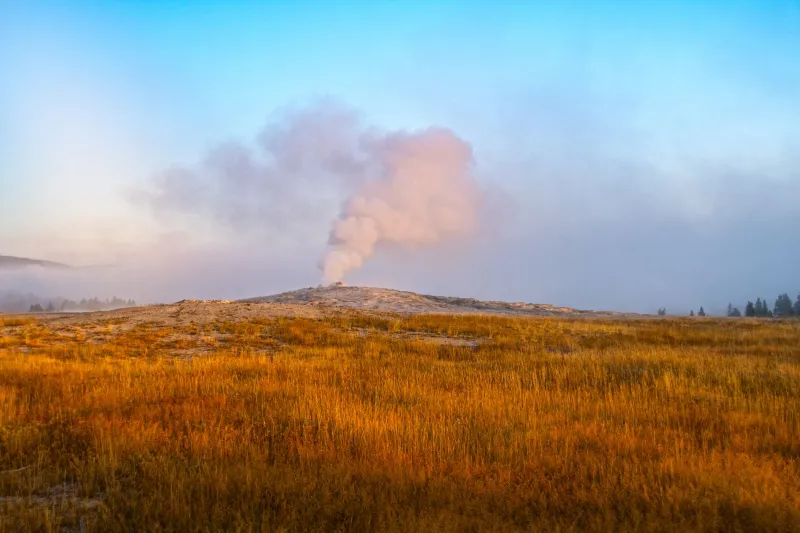
The first time Hazel Hawkins noticed something was wrong, she was eleven years old and her father's cattle were coughing.
 Photo: Hazel Hawkins, via calhospital.org
It wasn't a dramatic moment. There were no headlines, no emergency meetings, no government inspectors pulling up the gravel drive. It was just a Tuesday on a Wyoming cattle ranch in the early 1950s, and the animals her family depended on for everything — their income, their identity, their future — were struggling to breathe. The industrial facilities creeping closer to the basin had been releasing particulate-heavy emissions for years. The Hawkins family could see the smudge of it on the horizon most mornings. They just didn't have a word for what it was doing to them.
Hazel did, eventually. But it took her a long time to find it.
A Childhood Spent Watching Things Die Slowly
Growing up in rural Wyoming in the postwar years meant understanding, in a bone-deep way, that the land was not decorative. It was functional. It fed you. When the grass thinned or the water ran strange colors or the cattle started losing weight despite full pastures, it wasn't an environmental abstraction — it was a financial crisis. It was your family's survival flickering.
Hazel's father was not a political man. He didn't write letters to representatives or attend town halls. He fixed fences and moved cattle and hoped things would improve on their own. But Hazel was the kind of kid who asked questions out loud and kept asking them when the answers didn't satisfy her. Her mother called it stubbornness. Her teachers called it persistence. Both were right.
She didn't leave Wyoming until she was nineteen, when she followed a cousin to Denver looking for work. The city was a revelation — and not entirely a comfortable one. The air there was thick in a different way, a gray urban haze that sat over the streets and made her think, immediately, of home. Of the smudge on the horizon. Of the coughing cattle.
Something clicked into place that she wouldn't fully understand for another decade.
Learning the Language of Power Without a Classroom
Hazel never went to college. She worked secretarial jobs, then bookkeeping, then found her way into a small civic organization in Denver that was, in the mid-1960s, just beginning to talk about what we now call environmental advocacy. At the time, there was barely a vocabulary for it. "Pollution" was a word that existed, but the idea that ordinary citizens might have legal standing to challenge the industries producing it — that was still largely theoretical.
She was a quick study in the mechanics of civic engagement. She learned how public comment periods worked. She learned which committee meetings were technically open to the public and which ones you had to know someone to get into. She learned that the people who showed up consistently, who brought documentation, who spoke in plain language about concrete consequences, were harder to dismiss than the people who showed up once with a lot of passion and no follow-through.
And she had something most professional lobbyists didn't: a childhood full of specific, tangible evidence. She could describe, in exact sensory detail, what industrial air pollution looked like from the ground level of a working ranch. She could talk about soil chemistry changes in language that farmers understood and that, when translated into testimony, senators couldn't easily wave away as hysteria.
The Rooms She Wasn't Supposed to Be In
By the late 1960s, Hazel had become one of the more effective grassroots organizers working the emerging environmental beat in the Mountain West. She was building coalitions between ranchers and urban activists — two groups that had almost nothing in common culturally but shared a very direct stake in what was happening to the air and water.
This was her real gift. She understood that the rancher who hated the federal government and the Denver schoolteacher who'd never been west of Aurora were actually fighting the same battle. She could sit in a church basement in Cheyenne and make that case convincingly. She could also sit in a congressional hearing room in Washington and make it again, in slightly different language, to people who wore different suits but responded to the same basic argument: this is hurting real people, and here are their names.
She made those trips to Washington multiple times throughout the early 1970s, often at her own expense or on shoestring budgets cobbled together from small donations. She was not a famous face. She had no professional title that opened doors. What she had was a network of ordinary Americans — ranchers, teachers, parents, small business owners — who had written down their experiences and trusted her to carry those accounts into rooms she had no formal right to enter.
She entered anyway.
What the Clean Air Act Actually Required
The Clean Air Act of 1970 and its significant 1977 amendments didn't emerge from nowhere. They were the product of years of pressure from people working at every level of American civic life, from prominent environmental lawyers to anonymous letter-writers. Hazel Hawkins was somewhere in the middle of that spectrum — not a household name, but not invisible either.
What she contributed, specifically, was the organizing infrastructure that put non-expert, non-credentialed Americans into the legislative process in a sustained way. She helped develop template testimony formats that made it easier for ranchers and farmers with no legal training to participate in public comment periods. She coordinated travel for constituents to attend hearings in Washington, understanding that a senator who could put a face to an impact statement was more likely to feel the weight of it.
The EPA, established in 1970, needed those public comment mechanisms to have any meaning. Hazel's work helped ensure they weren't just procedural formalities — that real people actually showed up to use them.
The Unlikely Advantages of Starting Outside
There's a version of this story where Hazel Hawkins's lack of formal credentials is the obstacle she overcomes. But that framing misses something important. Her outsider status was, in many ways, the source of her effectiveness.
Because she hadn't been trained in law or policy, she never developed the habit of speaking in the language of those fields. She spoke in the language of consequences. Of specific mornings with sick cattle. Of specific seasons when the pasture grass came in wrong. That directness was disarming in rooms full of people who had learned to soften and qualify everything.
She also understood, from the inside, what it felt like to be the kind of person whose concerns were routinely dismissed as unsophisticated. That understanding made her a remarkably effective translator between the world of policy and the world of people living with the results of policy.
She never got wealthy from this work. She never had a building named after her. But the air above Wyoming's cattle country is measurably cleaner today than it was when she was eleven years old and watching her father's herd struggle to breathe.
Some legacies are invisible until you look up.