The Invisible Architect: The Quiet Engineer Whose Code Runs Half the World

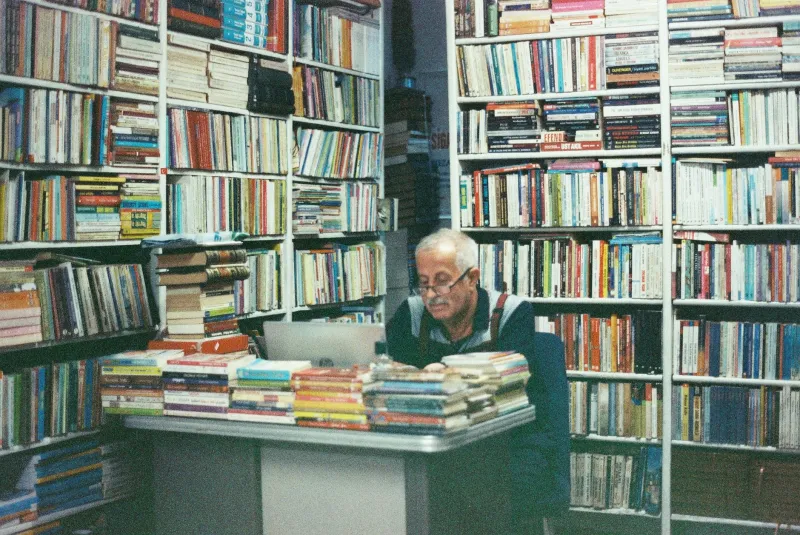
Somewhere in the middle of a forgettable decade, in a cluttered office that smelled like cold coffee and dry-erase markers, a man who hated meetings quietly changed the world. He didn't announce it. He didn't tweet about it. He probably didn't even mention it at dinner.
That's the thing about the people who actually build civilization — they're often the last ones standing at the podium.
The Room Where Nobody Looked
Jon Postel spent most of his professional life at the University of Southern California's Information Sciences Institute, a place that doesn't exactly conjure images of revolutionary tech. While Silicon Valley was busy minting celebrities and coining buzzwords, Postel was doing something quieter and, it turns out, far more durable: he was writing the rules that the internet would have to follow forever.
Born in 1943 in Altadena, California, Postel grew up in a world that hadn't yet imagined the thing he would help create. He was bookish and deliberate — the kind of kid who thought carefully before speaking and preferred precision over performance. Those traits, which might have made him invisible in a room full of salespeople, turned out to be exactly what the early internet needed.
He earned his PhD from UCLA in 1974 and almost immediately became one of the small, unglamorous crew of researchers working on ARPANET — the government-funded network that would eventually evolve into the internet most of us take for granted. It wasn't glamorous work. Nobody was getting rich. Nobody was on magazine covers. They were just trying to get computers to talk to each other without everything falling apart.
The RFC That Became the Law of the Land
Postel's most lasting contribution came through a deceptively simple document. In 1980, he authored RFC 793, which formalized the Transmission Control Protocol — TCP. If that sounds dry, consider this: every time you load a webpage, send an email, stream a video, or make a video call, TCP is the reason the data arrives in the right order, at the right place, without dissolving into gibberish. It is, without exaggeration, one of the foundational texts of the digital age.
But Postel didn't stop there. For decades, he served as the editor of the RFC series — the Request for Comments documents that function as the internet's constitutional convention, its Federalist Papers, its building code. He oversaw hundreds of them. He also managed the assignment of IP addresses and domain names through what became known as IANA — the Internet Assigned Numbers Authority — essentially running the internet's address book from his quiet office in Marina del Rey.
And he did all of it without becoming a household name. By choice.
The Power of Staying Out of the Room
What made Postel's obscurity remarkable wasn't just modesty. It was strategy — even if he never framed it that way. He had a near-allergic reaction to self-promotion. Colleagues recall that he'd skip conferences when he could, deflect credit when he couldn't, and spend the time he saved going deeper into the work. Where others were networking, he was thinking. Where others were pitching, he was building.
There's a principle buried in that approach that doesn't get discussed enough in a culture obsessed with personal branding: deep focus is a competitive advantage. Not just for productivity, but for originality. When you're not performing for an audience, you're free to follow the problem wherever it leads — even into territory that looks unimpressive from the outside.
Postel's colleagues at ISI describe a man who was warm but unhurried, generous with his time but protective of his attention. He understood, intuitively, that the work mattered more than the recognition. "He just wanted things to work," one collaborator recalled. "Not to be seen making them work."
A Moment of Audacity
For a man known for staying in his lane, Postel pulled off one genuinely audacious move in January 1998. Without asking permission from anyone, he quietly redirected the root name servers of the internet — the master directories that tell all other computers where to find everything — from government control to his own supervision. For about two weeks, he effectively controlled the internet's address system.
The government noticed. They were not amused. Postel handed control back without a fight, and the episode was largely smoothed over. But it revealed something important: this quiet man in his cluttered office had accumulated, through decades of patient, unflashy work, a level of technical trust that no title or budget could replicate. People followed his redirect because they trusted him. Full stop.
It was the closest Jon Postel ever came to a power move. And he made it look like housekeeping.
What Obscurity Builds
Postel died in October 1998, at just 55, from complications following heart surgery. The internet he had helped architect was already becoming unrecognizable — louder, faster, more commercial, more chaotic. His death prompted tributes from engineers around the world, but almost none from the general public. Most people had never heard of him.
They still haven't.
But here's what obscurity built: a system so stable, so well-designed, so quietly correct that it has scaled from a few dozen research computers to billions of devices without its core architecture breaking. TCP still runs. The RFC process still runs. The domain name system still runs. All of it bearing the fingerprints of a man who preferred to be useful rather than famous.
There's a line in one of Postel's own documents — RFC 793 — that reads almost like a personal philosophy: "Be conservative in what you send, be liberal in what you accept." It was technical guidance for network protocols. It was also, apparently, how he lived.
Some people build monuments to themselves. Jon Postel built the road everyone else drives on. And then he went back inside.