Ten Cents and a Dream: The Street Corner Entrepreneur Who Built Black America's Financial Fortress
The Education That Came With Every Shine
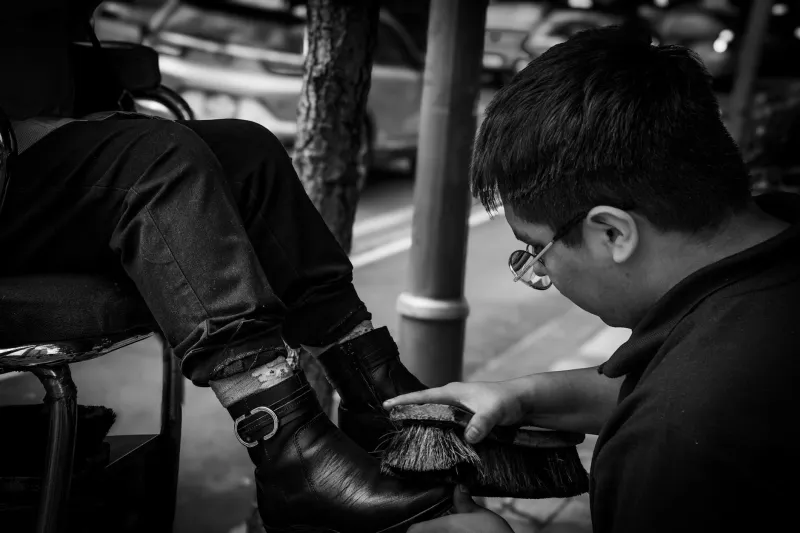
Marcus Williams never intended to become a banker. At fourteen, crouched on the dusty sidewalks of early 1900s Tulsa with his wooden shoeshine box, he was just trying to eat. But as oil money poured into Oklahoma and boots got muddier, Williams discovered something more valuable than the dimes dropped into his palm—he was getting a front-row seat to conversations about money that most people his age would never hear.
"Every pair of shoes tells a story," Williams would later tell reporters. "But the mouths above those shoes—they tell you how fortunes are made."
While other boys his age were in school or working factory jobs, Williams was inadvertently attending the most exclusive business school in Oklahoma. His clients included oil speculators, land developers, and railroad executives who treated their teenage shoeshine boy like furniture—present but invisible. They discussed deals, debated investments, and complained about banks while Williams worked silently below, absorbing every word.
The Dime Jar That Started Everything
What set Williams apart wasn't his ambition—plenty of young men in Tulsa's growing Greenwood District had dreams of wealth. It was his obsessive relationship with money. Every dime he earned went into a mason jar buried beneath the floorboards of his family's tiny rented room. No candy, no picture shows, no new clothes. Just dimes, accumulating with mathematical precision.
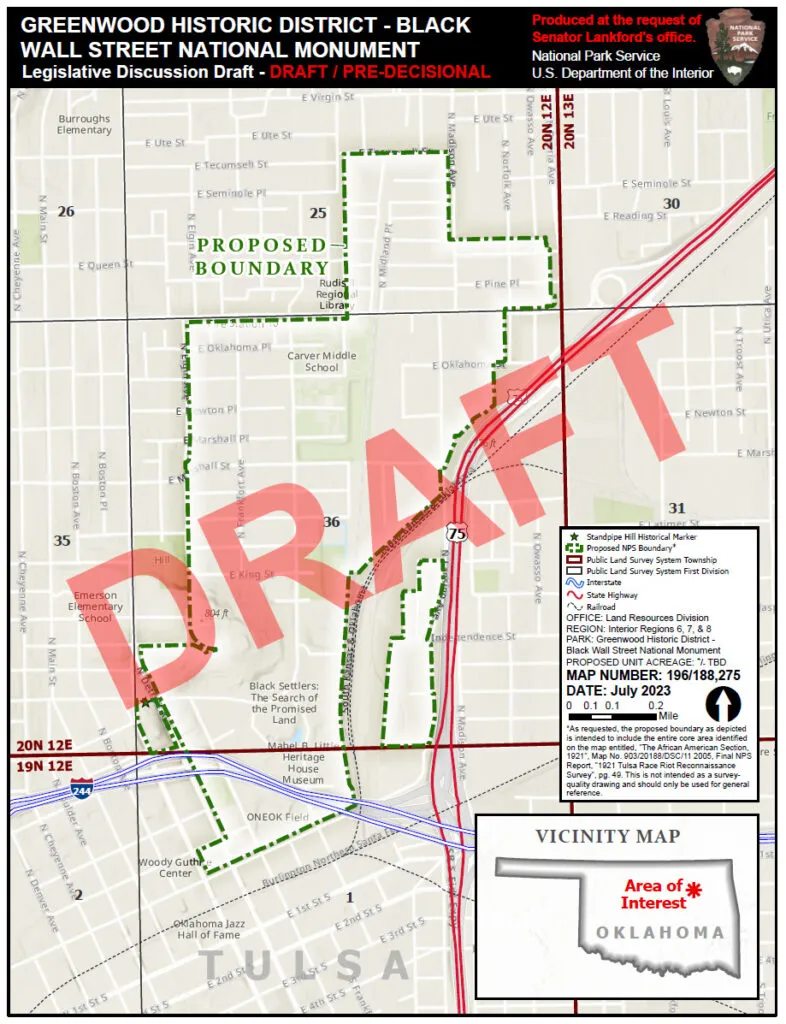 Photo: Greenwood District, via www.tulsatoday.com
By 1908, at seventeen, Williams had saved $127—more than most adults in Greenwood earned in three months. But money wasn't the real treasure he'd accumulated. Three years of listening had taught him something revolutionary: wealthy people didn't just save money, they made it work.
"I heard Mr. Henderson tell Mr. Crawford that money sitting still is money dying," Williams wrote in a journal that would later be discovered by historians. "That night I decided my dimes needed to start moving."
The Mentor Who Changed Everything
Williams's transformation from saver to investor began with an unlikely friendship. Samuel Morrison, a white banker who'd grown fond of the quiet, efficient boy who shined his shoes every Tuesday, noticed Williams reading discarded financial newspapers during slow periods.
"You understand any of that, son?" Morrison asked one afternoon in 1909.
"Some," Williams replied. "Enough to know that Sinclair Oil is buying land faster than they can drill it."
Morrison was intrigued. Over the following months, their Tuesday shoe shines evolved into informal economics lessons. Morrison explained compound interest, taught Williams to read balance sheets, and—most importantly—introduced him to the concept of community banking.
"Black folks need their own banks," Morrison told him during one of their sessions. "White banks serve white interests. You people need someone who understands your struggles."
It was an unusual perspective from a white banker in 1910 Oklahoma, but Morrison had watched Greenwood grow and recognized an underserved market when he saw one.
From Shine Box to Safe Deposit Box
By 1912, Williams had parlayed his savings and Morrison's guidance into a small but profitable money-lending operation. Working from the back room of a Greenwood barbershop, he offered small loans to Black families who couldn't get credit from white-owned banks. His rates were fair, his requirements minimal, and his collection methods relied more on community pressure than legal threats.
The business grew by word of mouth. Williams understood something that established banks missed—his customers weren't high-risk borrowers, they were people trapped in a system designed to exclude them. Given fair terms and genuine respect, they proved remarkably reliable.
"Marcus never looked at you like you were begging," remembered customer Dorothy Jenkins in a 1960s interview. "He looked at you like you were making a business deal. Because that's what it was."
The Institution That Rose From Ashes
In 1918, Williams opened the Greenwood Community Bank in a modest two-story building on the district's main thoroughfare. Unlike the grand marble facades of white banks downtown, Williams's institution felt like what it was—a neighborhood business run by neighbors for neighbors.
The bank's success was immediate and profound. Within two years, it held deposits from nearly half the families in Greenwood and had funded dozens of Black-owned businesses. Williams's lending philosophy remained unchanged from his barbershop days: character mattered more than collateral, community ties were stronger than legal contracts.
When the Tulsa Race Massacre devastated Greenwood in 1921, Williams's bank was one of the few institutions that survived—not because the building escaped destruction, but because Williams had scattered the bank's assets across multiple hidden locations throughout the city. While other businesses struggled to prove their worth to insurance companies, Williams was making loans to rebuilding families within weeks of the attack.
The Legacy That Outlasted the Destruction
The Greenwood Community Bank operated continuously until 1967, when Williams, then in his seventies, sold it to a larger institution. By then, it had financed the reconstruction of much of the Greenwood District, funded the education of hundreds of young people, and proven that community banking could survive and thrive even in the face of systematic oppression.
Williams died in 1974, but his influence extended far beyond his lifetime. The community banking model he pioneered—personal relationships, local knowledge, character-based lending—became a blueprint for minority-owned financial institutions across the country.
"He started with nothing but a willingness to listen," said Dr. James Patterson, a historian who studied Williams's papers. "That might be the most important business lesson of all."
From a shoeshine box to a banking empire, Williams's story proves that sometimes the best education comes not from textbooks, but from paying attention to the world around you—even when that world assumes you're not listening.