Dumpster Meals and Borrowed Typewriters: The Homeless Pittsburgher Who Rewrote American Theater
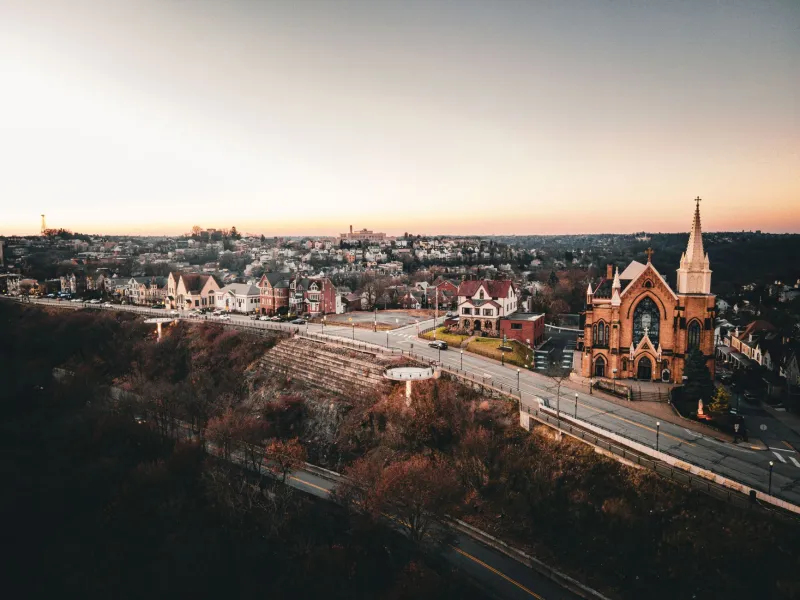
There's a diner on the Hill District side of Pittsburgh that probably doesn't know what happened at its corner tables. Sometime in the early 1970s, a young man with no fixed address, no industry contacts, and a typewriter he didn't own sat down in a booth and started writing plays. He paid for his coffee slowly, made it last, and filled page after page with voices he'd been carrying around in his head since childhood. His name was August Wilson, and the American theater would never quite recover.
 Photo: August Wilson, via static01.nyt.com
The Education Nobody Gave Him
Wilson was born Frederick August Kittel in 1945, the fourth of six children in a two-room apartment in Pittsburgh's Bedford Dwellings housing project. His mother, Daisy Wilson, was Black and worked as a cleaning woman. His father, Frederick Kittel, was a white German baker who was largely absent from the family's life. Wilson took his mother's surname when he was older — a choice that said something about where he understood himself to come from.
School was a complicated experience. Wilson was genuinely brilliant, the kind of kid who devoured books the way other children devoured candy. But Gladstone High School, the predominantly white institution his family's move to a new neighborhood sent him to, was not built for him. Teachers accused him of plagiarizing a paper on Napoleon — it was simply too well-written, they decided, for a Black student to have produced. Wilson dropped out at fifteen, furious and quietly certain of something he couldn't yet put into words.
He educated himself instead. Carnegie Library became his university. He read Langston Hughes, Ralph Ellison, Dylan Thomas, and Amiri Baraka. He read anything that seemed to be reaching toward something true. He was not studying for a credential. He was building a private architecture of understanding, brick by brick, in the stacks of a public library on the North Side.
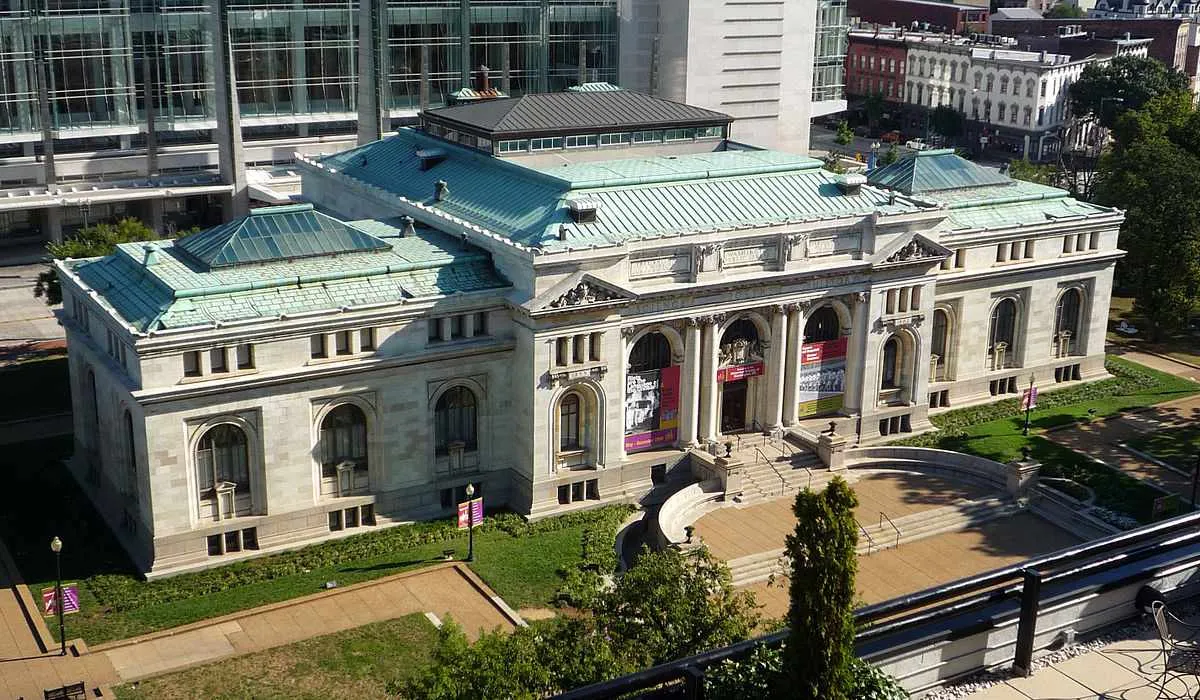 Photo: Carnegie Library, via www.treehugger.com
The Hungry Years
For much of his twenties, Wilson was broke in the specific way that grinds a person down and, occasionally, sharpens them. He ate meals rescued from restaurant trash. He slept where he could. He wrote poetry that nobody published, sent out manuscripts that came back without comment, and kept going anyway — not out of some movie-ready stubbornness, but because writing was the only activity that made the world feel navigable.
Pittsburgh's Hill District, where he spent most of these years, was a neighborhood in the long aftermath of urban renewal's cruelties. It had once been a thriving hub of African American commerce and culture — a place where jazz legends played and Black-owned businesses lined the streets. By the time Wilson arrived as a young man, much of it had been bulldozed to make way for a civic arena that the neighborhood's own residents couldn't afford to attend. What remained was a community holding its shape through memory, music, and the particular resilience of people who had been told their history didn't matter.
Wilson listened. That was his real education — not the library, not the diner booths, but the voices of the Hill District. The way men talked on stoops. The way women negotiated impossible situations with dignity and humor. The way history pressed down on ordinary conversations without anyone naming it directly.
Ten Plays, One Century
By the time Wilson began writing seriously for the stage in the late 1970s, he had something most playwrights simply don't have: a complete inner world, fully furnished, that no workshop had touched. He wasn't working from craft exercises or theoretical frameworks. He was transcribing something he had lived inside for twenty years.
The Pittsburgh Cycle — ten plays, each set in a different decade of the twentieth century, each examining a different facet of Black American experience — emerged from that interior world over the next three decades. Ma Rainey's Black Bottom. Fences. Joe Turner's Come and Gone. The Piano Lesson. Play after play arrived with a density of language and moral complexity that stopped critics in their tracks. Wilson won two Pulitzer Prizes for Drama. He won a Tony. He became, in the estimation of many serious observers, the most important American playwright since Tennessee Williams or Arthur Miller — two men who had also, notably, written from the edges of their respective worlds.
But here's what the award citations tend to skip over: Wilson did not become great despite his years of poverty and exclusion. He became great through them. The Hill District didn't give him a subject. It gave him a way of seeing — one that recognized that ordinary people contain entire histories, that a conversation on a porch can carry the weight of centuries, that the credentialed mainstream had been telling an incomplete story about American life for a very long time.
What Outsider Status Actually Costs — and Gives
It would be dishonest to romanticize Wilson's early years. Hunger is not a creative gift. Homelessness is not character-building in any straightforward sense. The years Wilson spent scrambling were genuinely hard, and they cost him things he never fully recovered.
But there is something that happens when a person develops their voice entirely outside the institutions that usually shape artists. There are no gatekeepers to please, no professors to impress, no workshop consensus to internalize. The resulting work can be raw in ways that trained writers learn to sand down. It can be confident in ways that institutional approval sometimes erodes. It can be stubbornly, unfashionably itself.
Wilson never stopped being the kid who got accused of plagiarism for writing too well. He never stopped being the young man eating behind restaurants and filling pages in borrowed time. Those experiences didn't leave him — they became the engine of everything.
The Stage He Built from Scratch
August Wilson died in 2005, at sixty years old, having completed the final play in his cycle just weeks before his death. The Broadway theater that bears his name — the only Broadway house named for a Black playwright — sits on 52nd Street in Manhattan, about as far geographically from Pittsburgh's Hill District as you can get and still be in the same country.
But the distance from where he started to where his name now sits in lights is not really a geographic story. It's a story about what happens when someone who was never supposed to get inside the room decides, quietly and with enormous determination, to build a different room entirely.
The diner booths are still out there. The borrowed typewriters are still available, one way or another. The question Wilson's life keeps asking is whether anyone sitting in those booths right now is listening hard enough to what the world around them is actually saying.