She Grew Up Among the Dead. Then She Learned to Save the Living.
Most children learn the alphabet before they learn anything about mortality. Lucille Perez learned them in reverse order.
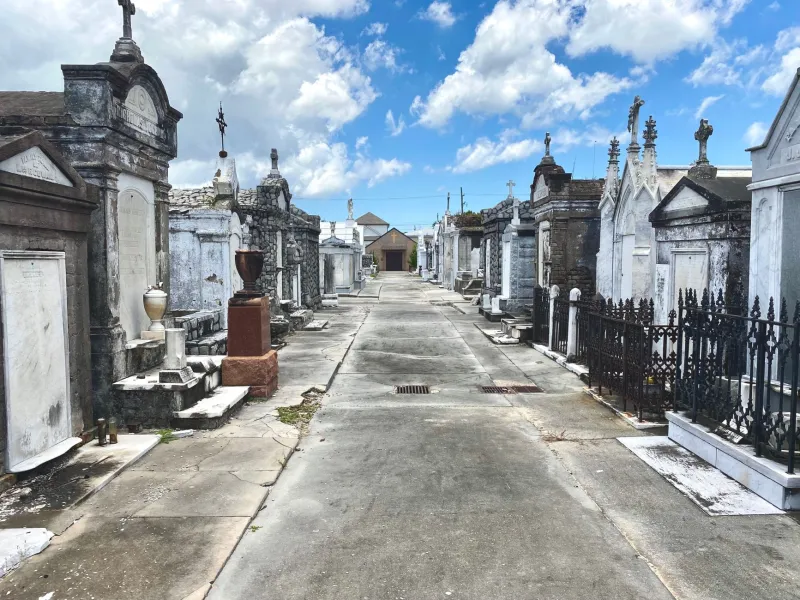
Her father, Eustace Perez, was the head groundskeeper and undertaker's assistant at St. Louis Cemetery No. 3 in New Orleans — one of the city's famous above-ground burial grounds, where the dead are sealed into stone vaults because the earth sits too close to the water table to hold them safely below. He worked the cemetery six days a week, and on most of those days, little Lucille was there beside him.
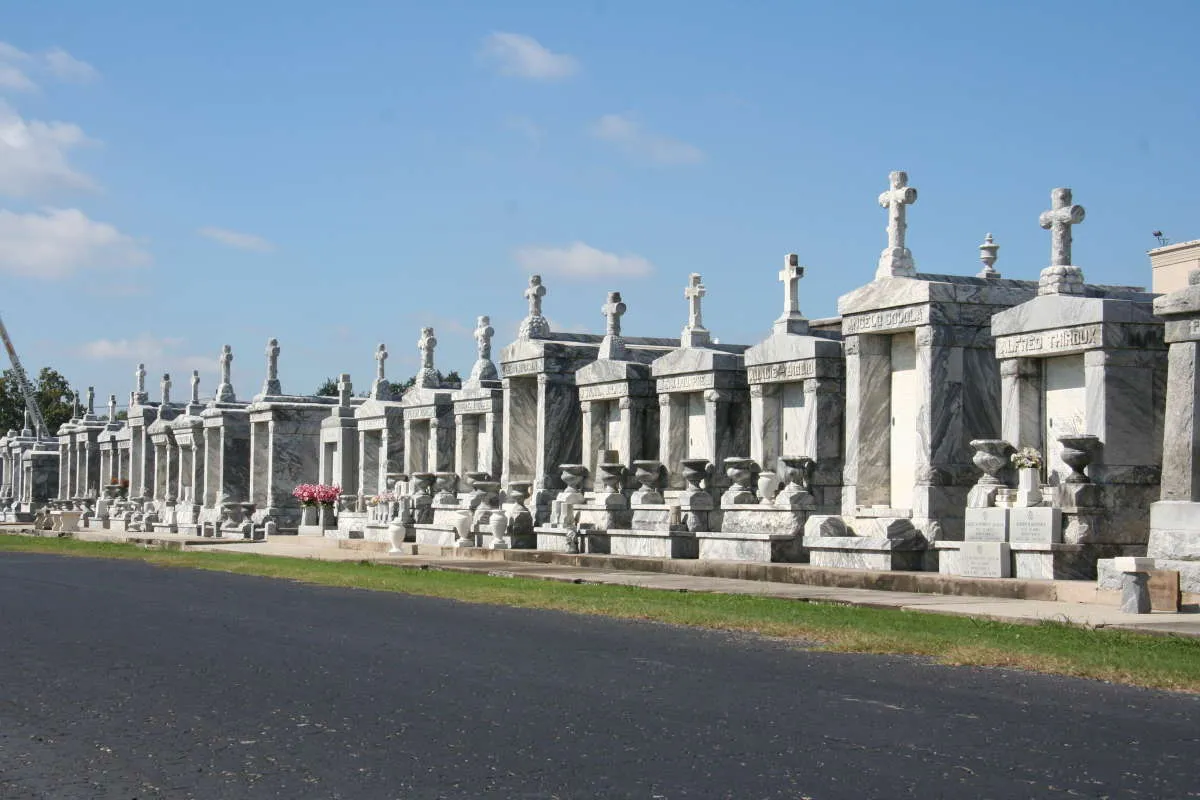 Photo: St. Louis Cemetery No. 3, via assets.simpleviewinc.com
She was not a morbid child, exactly. She was a curious one. And curiosity, in a cemetery, tends to go in only one direction.
The Education Nobody Planned
By the time Lucille was nine, she had developed a habit that would have unsettled most adults: she kept a small notebook in which she recorded, in her own improvised shorthand, the causes of death she overheard the mortuary workers discussing as they prepared bodies for burial. Consumption. Dropsy. Childbed fever. Lockjaw. She didn't always understand the words, but she understood the pattern — that the body had a logic to its failures, and that logic could be read if you paid close enough attention.
Her father noticed. Rather than discouraging her, he began narrating his observations aloud while he worked, the way a craftsman might explain a trade to an apprentice. He was not a medical man. He had no credentials beyond a hard-won knowledge of the physical body and its dissolution. But he had something rarer: the habit of looking closely without flinching.
Lucille absorbed everything.
She was also, by every account, ferociously intelligent in the conventional sense. Her teachers at the segregated school she attended in the Tremé neighborhood recognized it early. She read above her grade level before she was eight. She solved arithmetic problems the way other kids solved puzzles — for the pleasure of it. By the time she was a teenager, she had made up her mind. She was going to be a doctor.
In 1920s Louisiana, that ambition was not simply difficult for a Black woman. It was, by design, nearly impossible.
Every Door, Locked
The rejections began when Lucille was nineteen. She applied to Tulane's medical school and received no response — not even the courtesy of a formal denial. She applied to LSU's program and was told, plainly, that the school did not admit Negro women. She wrote letters to institutions in Georgia, in Alabama, in Tennessee. Some wrote back with polite regret. Most didn't write back at all.
A lesser person might have recalibrated her ambitions. Lucille recalibrated her strategy instead.
She enrolled in a nursing program at Flint-Goodridge Hospital, the primary Black medical institution in New Orleans at the time. She completed it in record time and immediately began working the wards — not as a passive caregiver, but as an insistent, sometimes aggravating presence who asked the attending physicians questions they were not accustomed to being asked by nurses, let alone Black nurses.
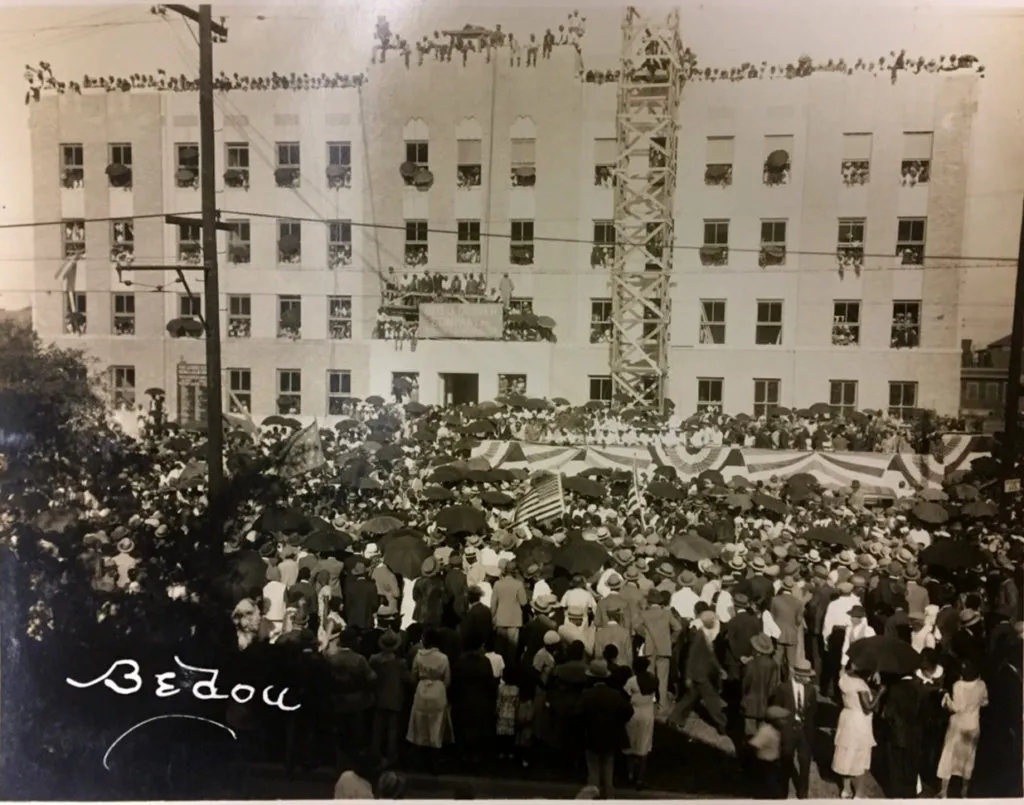 Photo: Flint-Goodridge Hospital, via www.creolegen.org
Some of those physicians were irritated. A few were quietly impressed. One — a Creole surgeon named Dr. Armand Fontenot — was both, and he became her unlikely mentor.
The Diagnostician They Couldn't Credential
Fontenot later said in interviews that Lucille Perez had the most instinctive diagnostic mind he had encountered in thirty years of practice. She could observe a patient for ten minutes and identify patterns that other clinicians missed entirely — not because she had read more textbooks, but because she had spent years learning to read the body as a text, long before she had access to the formal language of medicine.
Her cemetery childhood had given her something medical school curricula didn't always manage to: an unflinching, granular familiarity with what the body looks like when things go wrong. She had catalogued death as a child. Now she catalogued illness with the same unsentimental precision.
By the mid-1930s, Lucille was performing surgical assists on procedures Fontenot trusted no one else to support. Then, in 1938, when Fontenot was incapacitated by a sudden illness mid-procedure, Lucille completed the surgery herself — a bowel resection on a patient who would not have survived a delay. She had never performed a surgery as lead. She performed this one without hesitation.
The patient lived. The hospital's administration was not entirely sure what to do with that fact.
What the Records Show
Lucille Perez was never formally recognized as a surgeon by the Louisiana State Board of Medical Examiners during her lifetime. The credentials she was denied by segregation were never retroactively corrected by the institutions that denied them. History, as it tends to do with women like her, mostly moved on without pausing to take note.
But the records at Flint-Goodridge tell a different story. Surgical logs from the late 1930s and early 1940s document her participation in procedures at a level of responsibility that no nursing title adequately describes. Patient outcomes in her cases were, by the standards of the era, remarkably good. The community she served knew who she was and what she had done.
She continued working until her early sixties, training younger nurses and, quietly, younger physicians who sought her out because her reputation had a way of traveling through certain circles regardless of what her official title said.
She died in 1971. She never received a medical degree.
What the Cemetery Gave Her
There's a temptation, when telling a story like this, to frame the injustice as the whole story. It isn't. The injustice is real and worth naming plainly. But the more interesting question — the one Lucille herself seemed to find most worth pursuing — is what she built anyway, from materials nobody intended her to have.
A childhood spent among the dead gave her a diagnostic instinct that the living couldn't replicate in a classroom. A system designed to keep her out of medicine gave her, paradoxically, an intimate knowledge of how that system worked and where its gaps were. She moved through those gaps with a precision that, frankly, looked a lot like surgery.
Some people are made by their advantages. Lucille Perez was made by the absence of them — and by a father who taught her, in a New Orleans cemetery, that the body always tells you what happened if you're willing to look closely enough.
She looked closely. For fifty years, she didn't stop.