Every Door Closed, So He Flew Through the Window: The Oklahoma Dropout Who Crossed the Atlantic Alone
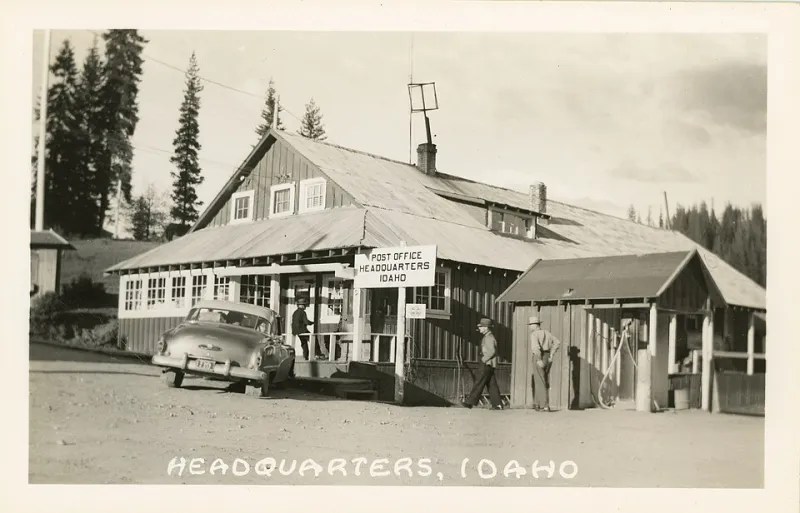
Photo: Steve Shook from Moscow, Idaho, USA, CC BY 2.0, via Wikimedia Commons
Shaky Hands and Stubborn Dreams
The flight instructor at the Tulsa aeronautics school didn't mince words. He handed back James Redcloud's enrollment application in the spring of 1947, pointed at the young man's fingers resting on the counter, and said the tremor he could see there — slight, barely perceptible, the kind that only shows up under stress — was a disqualifying condition. You can't hold a line, the instructor said. You'll never be precise enough.
 Photo: James Redcloud, via lookaside.fbsbx.com
James was twenty-two. He'd already been expelled from two schools, one for fighting, one for what his records described as "chronic insubordination" — which, by his own later account, meant asking too many questions that teachers couldn't answer. He'd grown up on a patch of rocky land outside Pawhuska, Oklahoma, the grandson of a Osage man who had watched the oil boom transform his nation's land into someone else's wealth. James had watched his family navigate a world that kept rearranging the rules mid-game. He was not, by temperament, someone who accepted the first answer he received.
 Photo: Pawhuska, Oklahoma, via c8.alamy.com
He thanked the instructor, walked out, and started looking for another way in.
Learning to Fly in the Margins
There was no official path available to him, so James built an unofficial one. He found an old crop duster pilot named Earl Briggs working out of a grass strip near Bartlesville who would let a man log hours in exchange for mechanical work. James didn't know much about engines, but he learned fast. He spent mornings reading maintenance manuals he'd borrowed from the county library and afternoons with his hands inside a Stearman biplane's engine compartment, getting an education in how flying machines actually worked rather than how textbooks said they worked.
Briggs was not a patient teacher by design, but he was an honest one. When James made mistakes — and he made them, often and spectacularly in the early months — Briggs told him exactly what he'd done wrong and why it mattered. There were no grades, no evaluations, no certificates at the end of a module. There was only the plane and the sky and the increasingly expensive question of whether James was going to figure this out.
He figured it out. Slowly, then all at once.
What the flight school instructor had identified as a liability — that barely-there tremor in James's hands — turned out to be something different in practice. Because he couldn't rely on fine motor precision the way credentialed pilots were trained to, James developed an almost intuitive relationship with the aircraft's feedback systems. He read the plane through his feet and his seat and the pressure in his chest before his hands ever needed to respond. It was a compensatory technique that no curriculum had ever produced, because no curriculum had ever needed to.
The Idea That Everyone Called Insane
By 1951, James had accumulated more than eight hundred hours in the air, none of them officially documented in any way that the aviation establishment recognized. He had also developed an idea that everyone in his orbit agreed was somewhere between ambitious and delusional: he wanted to fly solo across the Atlantic.
Charles Lindbergh had done it in 1927. Others had followed. But no Native American pilot had ever attempted it, and James — who had by this point developed a sharp sense of which records meant something and which were just numbers — understood that this one meant something. Not for publicity. Not for fame, though he wasn't naive about what attention might do for his career. But because the Atlantic crossing was the kind of thing that couldn't be argued with. You either crossed it or you didn't. No instructor could grade it on a curve.
Funding was the first wall. He approached aviation sponsors, civic organizations, anyone with money and a tolerance for long odds. Most meetings ended quickly. A Tulsa businessman named Howard Gaines eventually agreed to back the attempt, less out of confidence than out of what he later described as an inability to say no to someone who clearly wasn't going to stop asking.
The plane was a modified single-engine craft, stripped of everything non-essential, fitted with extra fuel tanks that made it heavy and sluggish on the ground. James spent six months learning its particular personality — its tendency to pull left in crosswinds, the exact throttle position where the engine found its smoothest rhythm, the way the fuel weight shifted the center of gravity as the tanks emptied over long hours.
Thirty-Six Hundred Miles of Silence
James Redcloud lifted off from Newfoundland on a September morning in 1952, carrying sandwiches, a thermos of coffee, a hand-drawn checklist, and thirty-six hundred miles of open ocean between himself and the coast of Ireland.
The crossing took thirty-one hours and fourteen minutes. There were two periods of severe turbulence over the mid-Atlantic, one instrument malfunction that required him to navigate by star position for nearly four hours, and one stretch near the Azores where ice began forming on the wings and he had to descend sharply to warmer air. He landed at Shannon Airport with enough fuel remaining for approximately forty minutes of additional flight.
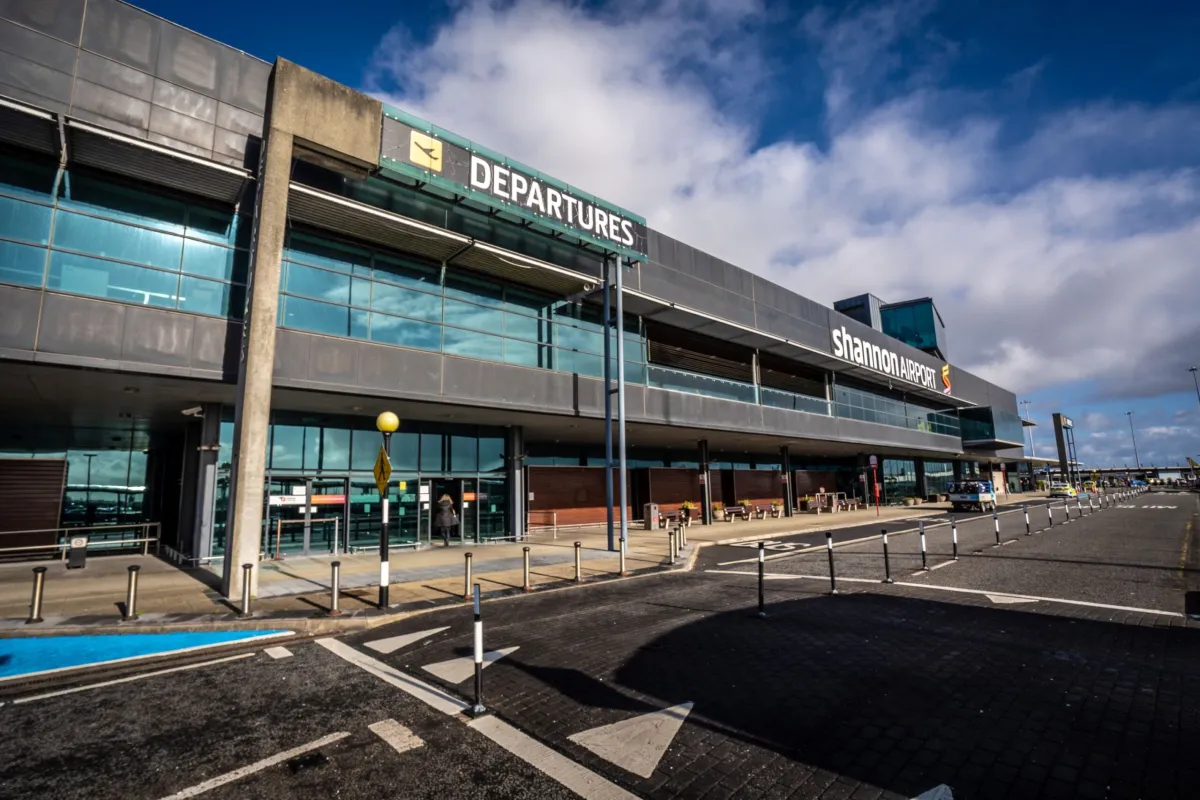 Photo: Shannon Airport, via www.clareecho.ie
The Irish press met him on the tarmac. The American papers picked up the story within twenty-four hours. The aviation establishment, to its credit, was gracious about a man who had arrived at their door without a formal invitation and knocked it off its hinges.
What Failure Actually Teaches
James Redcloud spent the rest of his career as a pilot, flight instructor, and — eventually — an advocate for Indigenous youth in aviation. He talked often about the expulsions, the rejected applications, the instructor who had handed back his paperwork and pointed at his hands.
He was not bitter about any of it. That surprised people. He explained it this way: the closed doors had forced him to find a path that was genuinely his own. Every technique he'd developed, every instinct he'd sharpened, had come from necessity rather than instruction. He hadn't learned to fly the standard way because the standard way wasn't available to him. So he'd learned to fly a better way.
"The people who told me no," he said in a 1967 interview, "were doing me a favor. I just didn't know it at the time."
The tremor in his hands, incidentally, never went away. He flew for another twenty years.