The Ballad Keeper: How an Appalachian Woman Who Never Read a Note Saved Four Centuries of American Music

Songs in the Blood
Ruby Mae Henderson never owned a songbook, never took a music lesson, and couldn't tell you what key she was singing in. But when she opened her mouth in the cramped recording studio at Berea College in 1952, the musicologists listening knew they were hearing something extraordinary: the sound of America itself, preserved in the memory of a woman who had never learned she wasn't supposed to be able to do what she was doing.
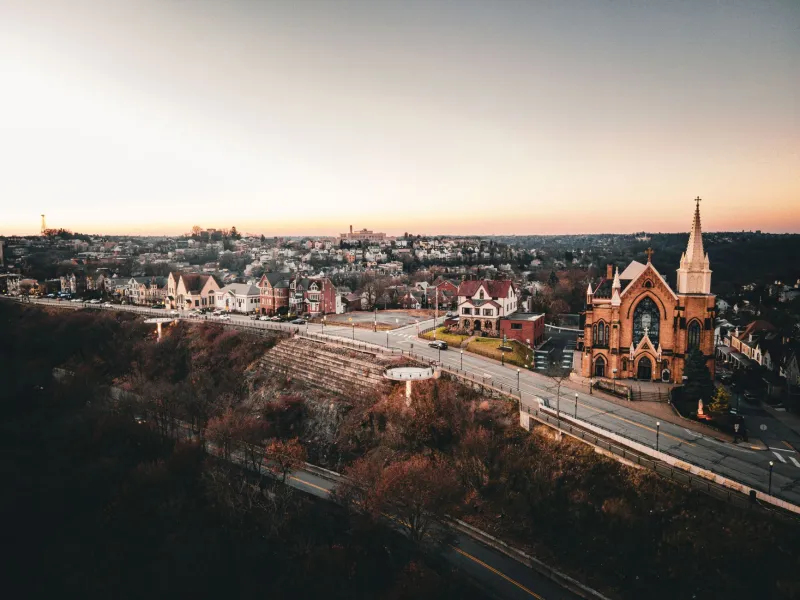
 Photo: Berea College, via cdn.manomano.com
 Photo: Ruby Mae Henderson, via images.squarespace-cdn.com
For seventy-three years, Henderson had been carrying around what scholars would later recognize as one of the most complete collections of Anglo-American ballads in existence—songs that had traveled from the British Isles to Appalachian hollers, passed down through generations of women who had no other way to preserve them except in their voices.
"Ruby Mae sang like she was delivering mail from the eighteenth century," remembered Dr. James Morrison, the folklorist who first recorded her. "Every ornament, every pause, every breath seemed to carry the weight of centuries."
The Accidental Archivist
Henderson grew up in a one-room cabin in Breathitt County, Kentucky, where entertainment came not from radios or phonographs, but from the songs that echoed through the mountains each evening. Her great-grandmother, Celia, had brought these ballads from Scotland as a young bride in the 1840s. Her grandmother, Sarah, had added new verses as life in the mountains demanded them. Her mother, Beulah, had taught them to Ruby Mae the way other mothers taught recipes—as essential knowledge for survival.
 Photo: Breathitt County, Kentucky, via blog.fcpeuro.com
"Singing wasn't something special in our house," Henderson later explained. "It was just what you did while you worked. While you cooked, while you sewed, while you waited for the men to come back from the mines."
What Henderson didn't know was that she was participating in one of humanity's oldest forms of historical preservation. These ballads—"Barbara Allen," "The House Carpenter," "Lord Randall"—were living documents, oral newspapers that had carried stories of love, betrayal, murder, and redemption across oceans and centuries.
By the 1950s, most scholars assumed these songs had been lost to modernization. Radio and recorded music were replacing the old traditions. The people who might have remembered the original versions were dying off, taking their knowledge with them.
The Discovery
Henderson might have remained unknown if not for a chance encounter with a visiting nurse who heard her singing while tending to Henderson's sick neighbor. The nurse, a folk music enthusiast, recognized something unusual in Henderson's voice—not just the beauty of her singing, but the archaic language and melodies that seemed to come from another time.
Word reached Dr. Morrison at Berea College, who made the two-hour drive into the mountains to meet this mysterious singer. What he found changed his understanding of how musical traditions survive.
"Ruby Mae didn't just know old songs," Morrison wrote in his field notes. "She knew them in their original forms, with verses and variations that we thought had been lost. But more than that, she understood them. She sang each ballad like she was telling you about something that had happened to her personally."
The Sessions
Over the course of three years, Henderson made regular trips to Berea College to record her repertoire. The sessions revealed the extraordinary scope of her musical memory. She knew 127 complete ballads, many running to twenty or thirty verses. She could sing them in different styles depending on the occasion—work songs for daily tasks, lullaby versions for children, formal presentations for special gatherings.
But Henderson's greatest gift wasn't just her memory—it was her understanding of how songs change and why they need to. Unlike classical musicians who strive for exact reproduction, Henderson knew that folk songs are living things. She would adjust verses based on her audience, add local references to make ancient stories relevant, modify melodies to suit her voice on a particular day.
"She was doing what folk singers had always done," explained ethnomusicologist Dr. Sarah Chen. "She was keeping the songs alive by allowing them to breathe, to grow, to respond to the world around them. That's something you can't learn from sheet music."
The Paradox of Preservation
Henderson's inability to read music turned out to be her greatest strength as a traditional singer. Because she learned each song by ear, she absorbed not just the notes and words, but the subtle variations in timing, the emotional inflections, the tiny ornaments that gave each ballad its character. She preserved what musicologists call the "performance practice"—the way songs were actually sung, not just how they looked on paper.
When scholars compared Henderson's versions to the earliest known written versions of these ballads, they found remarkable consistency. Songs that had been passed down orally for three hundred years had retained their essential character, their narrative power, their emotional truth.
"Ruby Mae proved that human memory, when properly trained and respected, could be more reliable than any written document," Morrison observed. "She was a walking library, a living archive."
The Legacy
Henderson's recordings became foundational texts for the American folk revival of the 1960s. Artists like Joan Baez, Bob Dylan, and Joni Mitchell studied her interpretations. Her influence can be heard in everything from bluegrass to indie folk, though most listeners have no idea they're hearing echoes of an illiterate mountain woman's voice.
More importantly, Henderson's work helped scholars understand that traditional knowledge doesn't always look like formal education. Her deep understanding of these songs—their historical context, their emotional content, their social function—came not from academic study but from living with them every day for seven decades.
"Ruby Mae taught us that there's a difference between knowing about something and knowing something," reflected Dr. Chen. "She didn't just know these songs existed. She knew what they meant, how they worked, why they mattered. That's not something you can get from a textbook."
Henderson died in 1967, but her voice lives on in archives and in the countless musicians she influenced. She never learned to read music, but she did something far more important: she remembered it, honored it, and passed it on. In a world increasingly dominated by written knowledge, she proved that some of our most precious wisdom still travels by word of mouth, carried in the voices of people who never thought they were preserving history—they were just singing the songs their grandmothers taught them.