Death Taught Him Everything About Beauty: The Funeral Parlor Kid Who Dressed America's Most Celebrated Women
The Smell of Formaldehyde and Silk
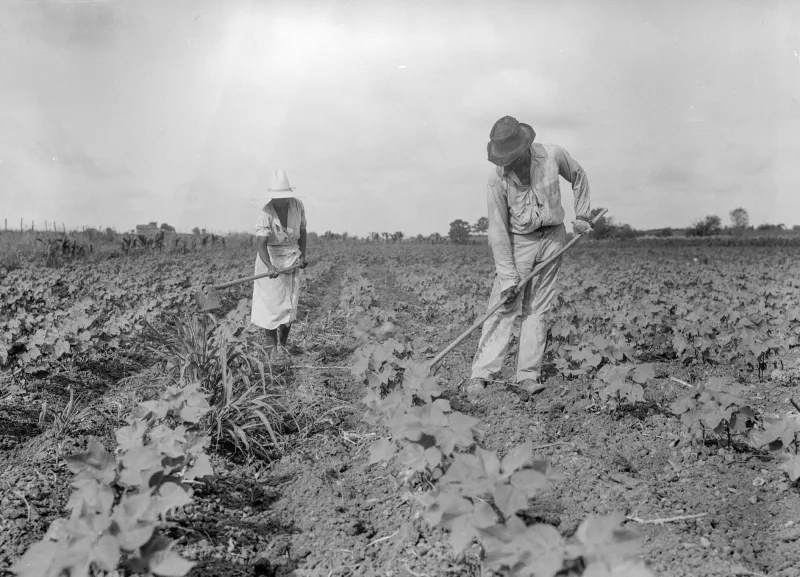
Most kids growing up in rural Mississippi in the 1940s didn't have a lot of reasons to think about the precise drape of a collar or the exact angle at which a jacket lapel should fall. But Willie Ray Tatum wasn't most kids. His father ran the only Black-owned funeral parlor in a three-county stretch of the Delta, and from the time Willie could walk, he understood something that most people take a lifetime to learn: presentation is a form of respect.
The dead, his father always said, deserved to look their best. It was the last thing you could do for them. And so the Tatum family did it with extraordinary care.
Willie watched his father press suits until every crease was a straight line to the horizon. He watched his mother pin corsages with the precision of a surgeon. He learned to see clothing not as fabric but as architecture — structures built to honor the body inside them. It was a strange education. It was also an extraordinary one.
A Town Too Small for His Vision
By the time Willie was a teenager, the funeral parlor felt like a rehearsal for something he hadn't yet named. He had started sketching — dresses, mostly, drawn in the margins of school notebooks and on the backs of order forms his father used for casket supplies. The women in his drawings stood tall, their garments precise and purposeful. Nothing wasted. Nothing accidental.
His teachers noticed. His classmates mostly didn't know what to make of it. Fashion design wasn't a career path that small-town Mississippi had a template for, especially not for a young Black man in the Jim Crow South. The paths available to him were narrow and well-worn. His sketches didn't fit any of them.
He was seventeen when he mailed his first portfolio — hand-drawn, carefully labeled — to a design school in Chicago. The rejection letter arrived in three weeks. He mailed another portfolio. Another rejection. He kept the letters in a shoebox under his bed like a collection of evidence that the world hadn't figured him out yet.
The Move North and the Long Apprenticeship
At nineteen, Willie left Mississippi with forty dollars, a suitcase, and a folder of drawings that had survived three years of rejection. Chicago in the early 1950s was loud and cold and indifferent in ways that rural Mississippi hadn't prepared him for. He found work in the garment district — not designing, not yet, but cutting fabric, pressing seams, doing the invisible labor that holds the industry together.
He was meticulous in a way that made his supervisors uncomfortable. He pressed every seam twice. He measured twice, cut once, then measured again. He had a habit of holding finished garments up to the light and tilting his head, looking for something no one else could see. His coworkers thought he was odd. His supervisor thought he was slow. His boss eventually thought he was indispensable.
The skills he'd absorbed in the funeral parlor — the patience, the attention to how fabric behaves under tension, the understanding that a garment must work from every angle because people are seen from every angle — translated directly into craftsmanship that set him apart. He just hadn't had a stage large enough to show it yet.
When the Stage Found Him
The break, when it came, arrived sideways, the way most real breaks do. A small boutique on the South Side needed someone to alter a dress for a client who was performing at a charity gala. The boutique owner had heard Willie's name from someone who'd heard it from someone else. He got the job. The client wore the altered gown. Someone at the gala asked who had done the work.
 Photo: South Side, via m.media-amazon.com
Within two years, Willie Ray Tatum had a small studio of his own. Within five, he had a reputation that had quietly crossed the color line that Chicago's fashion world still maintained. His clients were working women, society women, performers, and politicians' wives. They came because his garments fit in a way that felt almost personal — as though he had understood something about the woman before he ever took a measurement.
He had. He'd been studying how bodies carry dignity since childhood.
The Philosophy Behind the Seams
Willie rarely talked about his upbringing in interviews. The funeral parlor was a private thing, a foundation he kept below the surface. But the philosophy it had given him was visible in every garment he made. He believed, fundamentally, that clothing should honor the person wearing it — not overpower them, not distract from them, but hold them the way a good frame holds a painting.
"A woman shouldn't have to fight her clothes," he told a Chicago Tribune reporter in 1961. "She should walk in and her clothes should already be working for her."
It sounds simple. In practice, it required an almost obsessive attention to structure, to the way a shoulder seam distributes weight, to the relationship between a waistline and a woman's posture. These weren't things he'd learned in design school. He'd learned them watching his father prepare people for their final public appearance with the same quiet conviction that it mattered.
The Legacy That Wore No Label
Willie Ray Tatum never became a household name. He didn't build a fashion empire or land a spread in Vogue. His studio remained small by choice — he turned away work that would have required him to compromise his standards or scale faster than his hands could manage.
But the women who wore his garments knew. And some of them were very visible women. Performers who appeared on television in the early 1960s. Civic leaders photographed at important moments. Women whose names you might recognize standing at podiums or cutting ribbons in archival photographs, wearing something that sits on their shoulders with an unusual authority.
The through line from a Mississippi funeral parlor to those photographs is not a straight one. It runs through rejection letters and garment district cutting tables and a cold-water Chicago apartment and years of work that no one thought to document. But it runs, clearly and unmistakably, from a boy who learned that how you present a person to the world is an act of love.
That's not a lesson the fashion industry teaches. It's one that grief does.